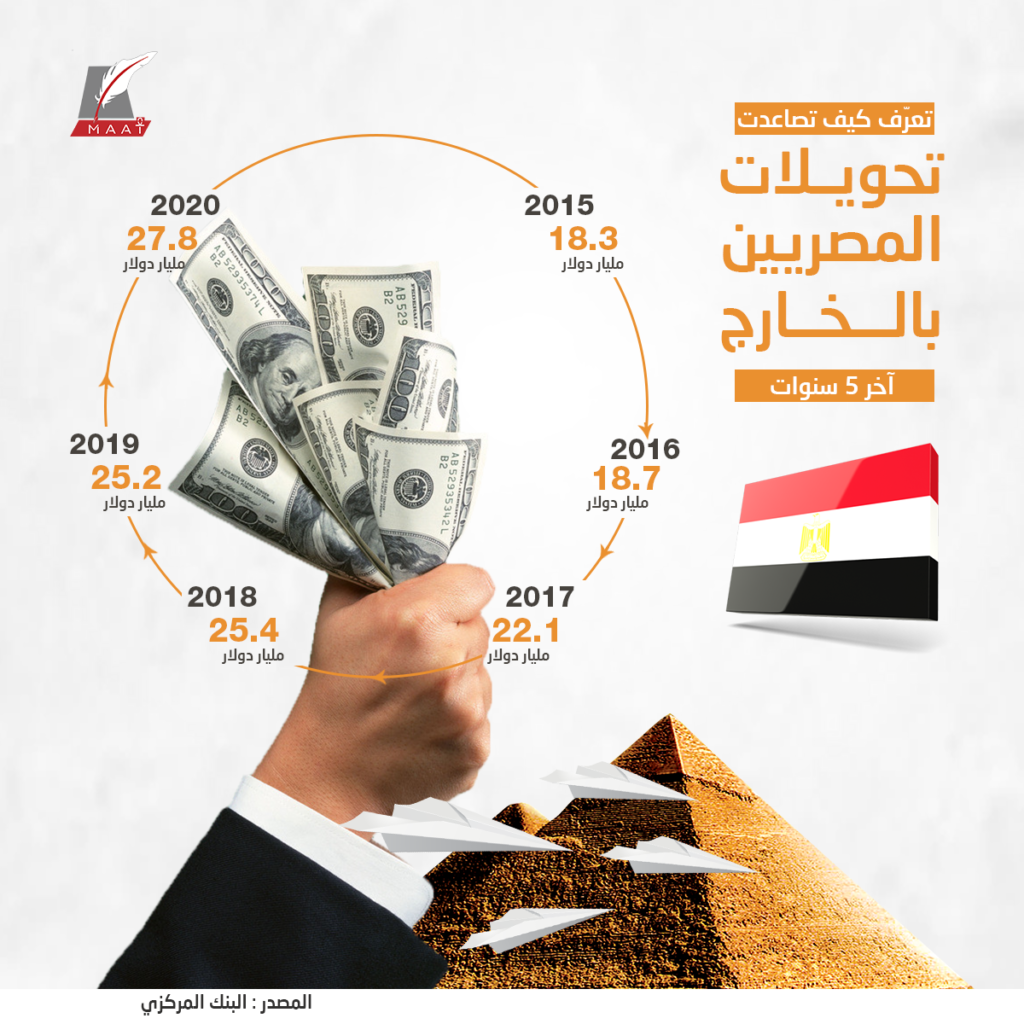
Record Growth in Remittances from Egyptians Abroad
Remittances from Egyptian Workers abroad witnessed a remarkable upswing during
the first eight months of 2025, increasing by 47.2% compared to the same period in 2024
According to official data, total inflows reached USD 26.6 billion, up from USD 18.1 billion
a year earlier marking one of the highest levels in recent years
This surge reflects growing confidence in the Egyptian economy, improved financial stability
and the Central Bank of Egypt’s continuous efforts to streamline money transfer channels and
attract more foreign currency inflows through the official banking system
Strong Monthly Performance in August 2025
On a monthly basis, Egyptian remittances in August 2025 jumped by 32.6%, reaching
Central Bank Egyptian Workers USD 3.5 billion, compared to USD 2.6 billion in August 2024
The consistent monthly growth highlights the resilience of remittance inflows and their
vital role in supporting foreign currency reserves and economic stability in Egypt
Egyptian Workers: The Economic Importance of Remittances
Remittances from Egyptians abroad remain one of Egypt’s most crucial sources of foreign
exchange earnings, helping strengthen the balance of payments and ensuring the availability
of hard currency to finance essential imports
In addition, remittances contribute significantly to household income, supporting millions of
Egyptian families, while also boosting consumption and overall economic growth
The steady expansion in digital banking and fintech solutions has also facilitated smoother
faster, and more secure money transfers, reducing reliance on informal channels
Egyptian Workers: Outlook for Continued Growth
Economic analysts anticipate that remittances will continue to grow during the remainder
of 2025, supported by a stable exchange rate, rising trust in Egypt’s banking sector, and
the expanding presence of Egyptians in international labor markets
The strong performance of remittances from Egyptians abroad underscores their central
role in sustaining Egypt’s economic stability and boosting foreign currency reserves, positioning
them as a key driver of financial resilience throughout 2025