رئيس مجلس الإدارة
سعيد اسماعيل
رئيس التحرير
مروة أبو زاهر

رئيس مجلس الإدارة
سعيد اسماعيل

رئيس التحرير
مروة أبو زاهر

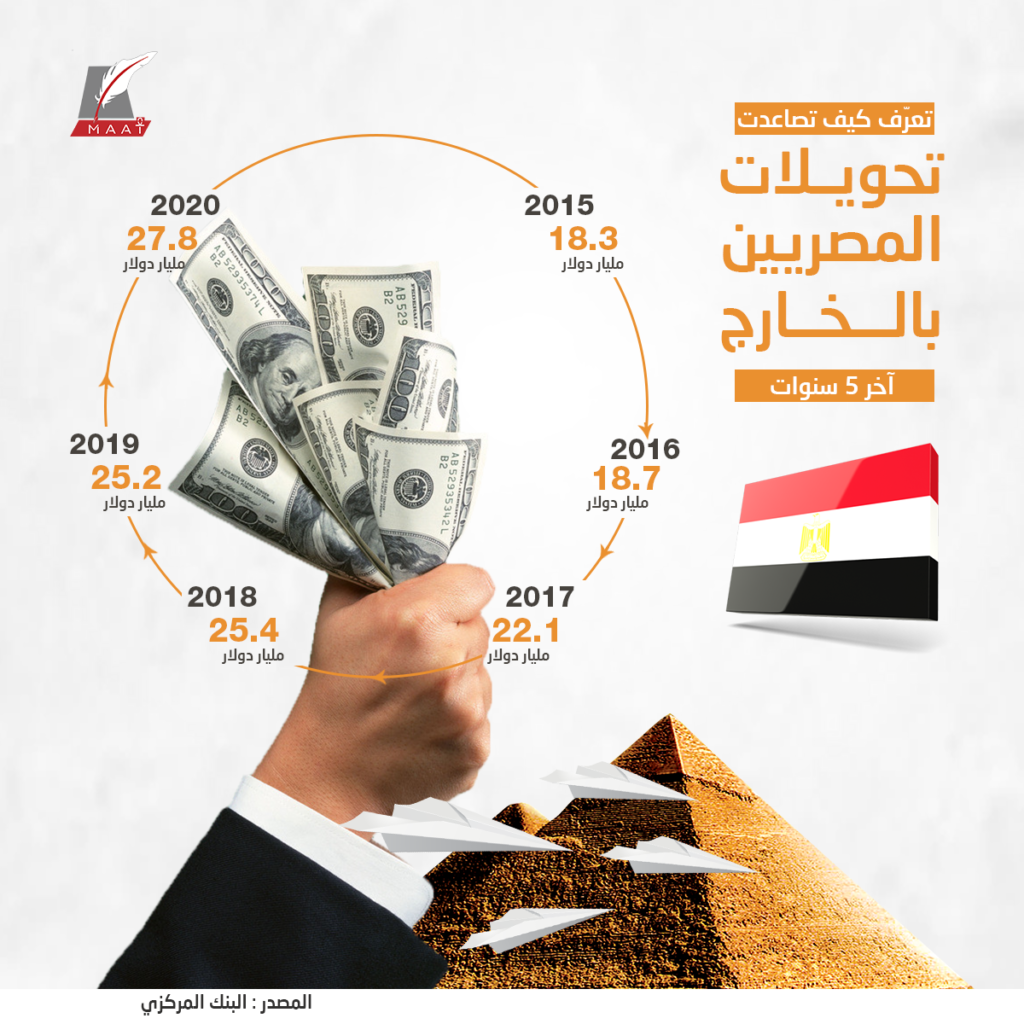
Egyptian Remittances Hit $33.9 Billion in First Ten Months of 2025

Record-Breaking Inflows from January to October 2025

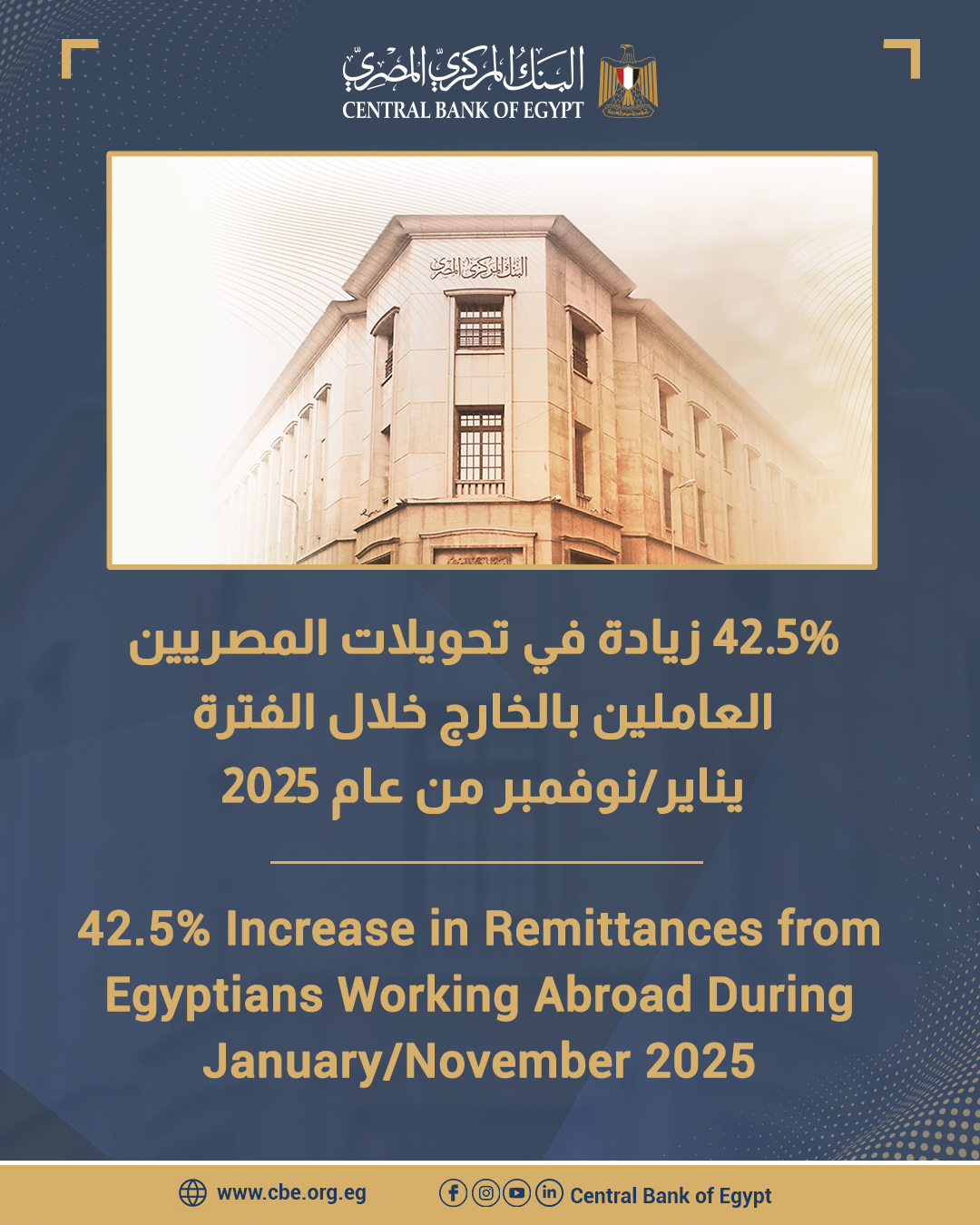
Egyptian remittances witnessed a remarkable increase during the first ten months of 2025

registering record-breaking foreign inflows of $33.9 billion, compared to $23.7 billion during

the same period in 2024—a growth rate of 42.8% On a monthly level, remittances during

October 2025 surged by 26.2%, reaching $3.7 billion, up from $2.9 billion in October 2024

This strong performance highlights the growing role of Egyptians working abroad in

supporting the national economy

October 2025 Sees 26.2% Monthly Surge in Remittances

Experts note that these remittances are a vital source of foreign currency, contributing

directly to Egypt’s foreign reserves, stabilizing the US dollar exchange rate, and boosting

investment in domestic projects and small-to-medium enterprises

Significance of Remittances for Egypt’s Economy

The rise in Egyptian remittances reflects both the enhanced financial capacity of the

Egyptian diaspora and improving global economic conditions that influence international money transfers

Egyptian Remittances Reach USD 30.2 Billion in First Nine Months of 2025

Remittances from Egyptians working abroad recorded a significant increase during the

first nine months of 2025, reaching an unprecedented USD 30.2 billion This represents

a remarkable 45.1% growth compared to USD 20.8 billion during the same period in 2024

highlighting the continued strength of Egyptian labor remittances and their vital role in

supporting the Egyptian economy

Monthly Growth: September 2025

On a monthly basis, remittances from Egyptian Remittances abroad rose sharply in September 2025

totaling around USD 3.6 billion This reflects a 30.9% increase compared to USD 2.7 billion

recorded in September 2024, demonstrating the sustained inflows of foreign currency and their

contribution to Egypt’s financial stability

Impact on the Egyptian Economy

Labor remittances remain a key pillar of the Egyptian economy, providing critical support

for foreign currency reserves, boosting household purchasing power, and financing domestic

consumption and investment The significant growth in remittances underscores the resilience

of these inflows amid global economic fluctuations

Outlook for the Remainder of 2025

Egyptian Remittances With improving global labor markets, Egyptian remittances are expected to continue

their upward trajectory for the remainder of 2025 This trend will further strengthen Egypt’s

financial position, support economic stability, and provide a reliable source of foreign currency inflows

Egyptian Workers Abroad Boost Remittances by 47.2% to Record USD 26.6 Billion

Record Growth in Remittances from Egyptians Abroad

Remittances from Egyptian Workers abroad witnessed a remarkable upswing during

the first eight months of 2025, increasing by 47.2% compared to the same period in 2024

According to official data, total inflows reached USD 26.6 billion, up from USD 18.1 billion

a year earlier  marking one of the highest levels in recent years

This surge reflects growing confidence in the Egyptian economy, improved financial stability

and the Central Bank of Egypt’s continuous efforts to streamline money transfer channels and

attract more foreign currency inflows through the official banking system

Strong Monthly Performance in August 2025

On a monthly basis, Egyptian remittances in August 2025 jumped by 32.6%, reaching

Central Bank Egyptian Workers USD 3.5 billion, compared to USD 2.6 billion in August 2024

The consistent monthly growth highlights the resilience of remittance inflows and their

vital role in supporting foreign currency reserves and economic stability in Egypt

Egyptian Workers: The Economic Importance of Remittances

Remittances from Egyptians abroad remain one of Egypt’s most crucial sources of foreign

exchange earnings, helping strengthen the balance of payments and ensuring the availability

of hard currency to finance essential imports

In addition, remittances contribute significantly to household income, supporting millions of

Egyptian families, while also boosting consumption and overall economic growth

The steady expansion in digital banking and fintech solutions has also facilitated smoother

faster, and more secure money transfers, reducing reliance on informal channels

Egyptian Workers: Outlook for Continued Growth

Economic analysts anticipate that remittances will continue to grow during the remainder

of 2025, supported by a stable exchange rate, rising trust in Egypt’s banking sector, and

the expanding presence of Egyptians in international labor markets

The strong performance of remittances from Egyptians abroad underscores their central

role in sustaining Egypt’s economic stability and boosting foreign currency reserves, positioning

them as a key driver of financial resilience throughout 2025

Central Bank: Remittances from Egyptians Abroad Reach All-Time High

Remittances from Egyptians abroad surged by 69.6%

reaching USD 32.8 billion during the period from July to May of the fiscal

year 2024/2025, compared to USD 19.4 billion during the same period of the previous

year, according to data from the Central Bank of Egypt

Strong Year-on-Year Growth in Remittances

Between January and May 2025, remittances increased by 59% year-on-year

 totaling approximately USD 15.8 billion, up from USD 9.9 billion in the corresponding

period in 2024

Record-High Inflows in May 2025

On a monthly basis, May 2025 witnessed historic remittance inflows

with total transfers reaching USD 3.4 billion. This marks a 24.2% increase year

-on-year compared to USD 2.7 billion in May 2024

 the highest remittance level ever recorded for the month of May

Central Bank: Key Implications for Egypt’s Economy

Central Bank The sharp rise in foreign currency inflows through remittances significantly

strengthens Egypt’s external position, contributes to foreign exchange reserves

and supports macroeconomic stability. These funds also play a crucial role in

household income and domestic consumption, especially under current global

economic pressures