رئيس مجلس الإدارة
سعيد اسماعيل
رئيس التحرير
مروة أبو زاهر

رئيس مجلس الإدارة
سعيد اسماعيل

رئيس التحرير
مروة أبو زاهر

Ericsson and e& Egypt partner to launch 5G in Egypt

Ericsson and e& Egypt partner to launch 5G in Egypt

 Ericsson and e& Egypt signed a partnership at GITEX Global 2024 for the launch of 5G in Egypt

, bringing faster connectivity speeds, lower latency, and greater bandwidth to consumers and enterprises.

 Ericsson will supply its 5G portfolio to build the network,

ensuring high performance and reliable connectivity while supporting the growth of technology

and network capacity across mobile generations.

Ericsson has signed a partnership agreement with e& Egypt at GITEX Global 2024

Ericsson (NASDAQ: ERIC) has signed a partnership agreement with e& Egypt at GITEX Global 2024

for the launch of 5G across the country.

Ericsson will supply its latest energy-efficient 5G portfolio to build the network,

providing the benefits of fast and reliable 5G connectivity.

The portfolio is designed to manage all site types and traffic scenarios to deliver high performance,

even as networks grow in technology and capacity across mobile generations.

Ericsson’s latest 5G Radio Access Network (5G RAN)

portfolio will be deployed with the Ericsson Radio System products and solutions.

5G will benefit consumers and enterprises in Egypt with faster speeds, lower latency,

and greater network resilience, which will contribute to advancing societies, transforming industries,

and enhancing day-to-day experiences.

“Amr”: “We are thrilled to bring 5G to Egypt with our technology partner, Ericsson.

Amr Fathy, Chief Technology and Information Officer, from e& Egypt,

says: “We are thrilled to bring 5G to Egypt with our technology partner, Ericsson.

Through this partnership, e& Egypt will be able to provide faster connectivity speeds,

larger bandwidth, and lag-free user experience to our customers,

unlocking many opportunities for consumers and enterprises.

With Ericsson’s cutting-edge 5G solutions, we are paving the way for a more connected

and innovative future for Egypt.”

Ekow Nelson, Vice President and Head of Global Customer Unit for e& at Ericsson Middle East and Africa,

says: “Our storied partnership with e& Egypt dates back nearly two decades,

with two generational shifts in mobile technology. Like previous technology shifts,

our ambition with 5G is to extend e& Egypt’s technology leadership.

We are proud of the confidence and trust shown to us by e& Egypt

and look forward to this next evolution in communications that promises to transform the way consumers

and enterprises experience the digital world.”

Ericsson has had successful partnerships with e& Egypt over many years in network evolution,

enhancing customer experience, and achieving sustainability objectives.

Social Media Scripts:

X Exciting news! We have partnered with e& Egypt at #GITEX Global 2024 to bring 5G to the country

with our latest energy-efficient 5G portfolio for faster connectivity in #Egypt. Read more [LINK]
Facebook We are thrilled to share that Ericsson has signed a partnership agreement at GITEX Global 2024

with e& Egypt for the launch of #5G across the country. With our latest energy-efficient 5G portfolio,

we will support e& Egypt in providing a fast and reliable connection,

benefitting consumers and enterprises in the country with faster speeds, low latency, and greater resilience.

Stay tuned as we bring you the future of connectivity! [LINK]

LinkedIn We are thrilled to share that Ericsson has signed a partnership agreement at GITEX Global 2024

with e& Egypt for the launch of #5G across the country.

With our latest energy-efficient 5G portfolio, we will support e& Egypt in providing a fast and reliable connection,

benefitting consumers and enterprises in the country with faster speeds, low latency, and greater resilience.

Stay tuned as we bring you the future of connectivity! [LINK]

NOTES TO EDITORS:

Ericsson Radio System

Radio Access Network

FOLLOW US:

Subscribe to Ericsson press releases here

Subscribe to Ericsson blog posts here

https://www.facebook.com/ericsson

https://www.linkedin.com/company/ericsson

MORE INFORMATION AT:

Ericsson Newsroom

[email protected] (+46 10 719 69 92)

[email protected] (+46 10 719 00 00)

ABOUT ERICSSON:

Ericsson’s high-performing networks provide connectivity for billions of people every day. For nearly 150 years,

we’ve been pioneers in creating technology for communication.

We offer mobile communication and connectivity solutions for service providers and enterprises.

Together with our customers and partners, we make the digital world of tomorrow a reality. www.ericsson.com

Landmark Developments Debuts “More Residences” – New Cairo’s Latest Luxury Serviced

Landmark Developments “LMD” Debuts “More Residences” – New Cairo’s Latest Luxury Serviced Residences

• Eng. Amr Sultan: “Thrilled to announce the launch of LMD’s first serviced residences in New Cairo’s largest mixed-

use concept, addressing the market’s unique demands.”

– Landmark Developments (LMD), one of the leading real estate developers in Egypt,

proudly announces the launch of “More Residences,” a new luxury development serviced by LMD. Ideally located

along the Youssef ElSebai Axis in New Cairo, this 50-acre project marks LMD’s first venture into serviced residences,

designed to meet the highest international standards.

“More Residences” seamlessly blending luxury

“More Residences” is part of the largest mixed-use concept in New Cairo “there,” seamlessly blending luxury

residential communities, diverse workspaces, upscale showrooms, exceptional dining, and vibrant retail experiences.

“More Residences” offers over 1,000 upscale units spread across multiple levels,

boasting panoramic views of 450 acres of greenery.

The project provides a range of options, from apartments (90 to 190 square meters)

to duplexes (181 to 220 square meters).

With more than 80% of the area dedicated to green and open spaces,

residents will enjoy amenities such as fitness areas, a kids’ zone, water features, an infinity pool, gathering spaces,

a clubhouse, F&B outlets, and underground parking for each cluster.

Conveniently located just 6 minutes from the Ring Road and 10 minutes from Cairo International Airport,

“More Residences” promises a comprehensive and sustainable living experience.

“sultan”: We are thrilled to announce the launch of Landmark Developments’s first serviced residences

Eng. Amr Sultan, CEO of LMD, stated,

“We are thrilled to announce the launch of LMD’s first serviced residences in New Cairo’s largest mixed-use

concept, showcasing our commitment to diversity

and our strategic presence in premium, unique locations that deliver exceptional experiences.

This endeavor reinforces LMD’s leadership in the Egyptian real estate market.

With our diverse portfolio encompassing both Egypt and international markets,

we are dedicated to raising the bar for quality and innovative design.”

It is worth mentioning that the launch of “More Residences” aims to build on the remarkable success of LMD’s

previous commercial projects, “Eastside” and “Eastmed,” within “there” in New Cairo.

About LMD

LMD is one of the premier real estate developers, specializing in creating transformative residential

and commercial experiences. Since 2007, the company has leveraged innovation

and expertise to deliver iconic mixed-use developments in prime locations across Egypt.

These community-centric developments embody a seamless living experience while setting new standards in quality and design.

With unwavering commitment to geographic expansion, LMD launched several remarkable projects across Dubai,

Spain, and Greece. The company’s portfolio boasts 10 landmark projects in Egypt,

such as “Stei8ht”, “One Ninety”, and “Zoya” on the North Coast,

as well as 7 notable projects in Dubai, including “The Pier Residence”.

Establishing a foothold in Europe, LMD has introduced “Muntaner 91” in Barcelona,

followed by 5 projects in Greece, including the world-class “Karaiskaki 15” and “Archimidous 5”.

For more information, visit: https://lmd.com.eg/

OPPO x Venom: The Last Dance: Unleash the Power of the Reno12 5G

OPPO x Venom: The Last Dance: Unleash the Power of the Reno12 5G

OPPO is thrilled to announce a groundbreaking collaboration with the highly anticipated movie, Venom

The Last Dance, which hits theaters on October 24th.

This dynamic collaboration aims to unleash the power within,

inviting customers to experience the extraordinary features of OPPO’s latest smartphone,

OPPO Reno12 5G is inspired by the superhuman abilities of Venom.

Unleashing Venom-like Power with OPPO Reno12

Just as Venom possesses super strength, enhanced senses, durability,

and shapeshifting abilities, the OPPO Reno12 5G is engineered with all-round features designed

to empower users. These include:

– AI Eraser 2.0: OPPO’s enhanced AI tool effortlessly removes unwanted objects from photos

, mimicking Venom’s shape-shifting abilities to deliver perfect results.

– All-Round Armour: Equipped with a high strength bold, design centered around a space-age silver

exterior. The rear glass panel of the model has been crafted with OPPO’s Fluid Ripple Texture,

like Venom’s protective armor. The phone’s IP65 rating ensures resistance against splashes and dust,

with Splash Touch keeping the screen responsive even when the users’ hands are wet.

– 80W SUPERVOOCTM Flash Charge Experience rapid charging on the go with OPPO’s SUPERVOOC

technology, providing the speed and endurance that users need—just like Venom’s swift recovery powers.

The phone can be fully charged from 1% to 32% in just ten minutes,

with a more 47 minutes needed for a full 100% charge.

– LinkBoost: With Venom’s enhanced senses in mind, OPPO’s LinkBoost helps boost connectivity in even

weak network environments such as crowd or parking lots.

Venomize Your Selfies

As part of this collaboration, OPPO launches an exclusive template inspired by Venom:

The Last Dance, encouraging fans to unleash their inner Venom and “venomize” their selfies.

OPPO Reno12 5G empower users with the tools they need to tackle their everyday challenges—whether

through durability, creativity, or speed.

About Venom: The Last Dance

In Venom: The Last Dance, Tom Hardy returns as Venom,

one of Marvel’s greatest and most complex characters, for the final film in the trilogy.

Eddie and Venom are on the run. Hunted by both of their worlds and with the net closing in,

the duo are forced into a devastating decision that will bring the curtains down on Venom and Eddie’s last dance.

Venom: The Last Dance stars Tom Hardy, Chiwetel Ejiofor, Juno Temple, Rhys Ifans, Stephen Graham,

Peggy Lu and Alanna Ubach. The film is directed by Kelly Marcel from a screenplay she wrote,

based on a story by Hardy and Marcel.

The film is produced by Avi Arad, Matt Tolmach, Amy Pascal, Kelly Marcel,

Tom Hardy and Hutch Parker.

About OPPO

OPPO is a leading global smart device brand,

committed to creating innovative and user-friendly technology.

Since launching its first smartphone in 2008, OPPO has pushed the boundaries of mobile technology,

integrating cutting-edge design with powerful performance.

Today, OPPO is known for its advanced photography capabilities,

fast-charging technology, and commitment to delivering high-quality products to customers worldwide.

Cratos Real Estate oversees investment portfolios exceeding EGP 4bn in Egyptian Market

Cratos Real Estate Investment has successfully grown the value of its managed investment portfolio in Egyptian market to over EGP 4bn, while surpassing EGP2bn in Kuwait. The company also announced its plans to expand into the Saudi market in 2025.
Mohamed Amin, CEO of Cratos Real Estate, stated that financial consulting is a crucial tool for securing sustainable success in investment and finance. These services offer guidance on making informed, strategic investment and financing decisions. The primary objective of a financial consultant is to assist both individuals and businesses in reaching their financial goals and ensuring long-term success.
He highlighted that creating a comprehensive financial plan is crucial for achieving sustainable success in both investment and finance. Individuals and businesses should craft a plan that clearly defines their financial goals and the strategies needed to accomplish them.
He further noted that his company provides a range of consulting services, including financial, administrative, legal, marketing, engineering, and sales support for clients.
He pointed out that Cratos Real Estate began its operations in the Egyptian market in 2021 and has successfully partnered with major Egyptian real estate development companies, collaborating on 10 large-scale real estate projects. The company also provides its services to 3 companies in Kuwait, specializing in real estate, import, and export, as well as to 3 companies in Libya on 6 projects there.
Amin further added that his company offers a wide range of services to businesses, including the development of financial and strategic plans spanning up to five years. Additionally, the company supports businesses in crafting detailed financial plans for individual projects, organizing tasks, monitoring progress, and generating analytical reports. These reports are designed to assess project performance, guide decision-making, and effectively manage crises.
Mohamed Amin, CEO of Cratos Real Estate, possesses a robust financial background. Over the course of his career, he has excelled as the CFO of Smart Village, CFO of Naeem Holding, and CFO of Catalyst Group, which encompasses 14 companies both in Egypt and abroad. He is highly ambitious about expanding Cratos on both regional and global scales.

ATERMES to showcase Cutting-Edge Surveillance Solutions at Milipol Qatar 2024

ATERMES, a French leader in advanced surveillance and security solutions, announces its participation in Milipol Qatar 2024, a significant event dedicated to homeland security and public safety which will be held from 29 to 31 October 2024 at the Doha Exhibition and Convention Center. Expanding its reach in the Middle East and Africa (MEA), ATERMES is committed to delivering cutting-edge solutions to address the most pressing challenges in public safety, defense operations, and critical infrastructure protection.
At Milipol Qatar, ATERMES will present its revolutionary SURICATE Smart Surveillance System, an advanced optronics system that incorporates artificial intelligence (AI) and edge computing. This highly sophisticated technology delivers real-time threat detection and classification, setting a new standard in modern security solutions. Whether it is securing borders, protecting critical infrastructure, or safeguarding military bases, SURICATE sets a new standard for modern security solutions.
SURICATE’s edge AI capabilities allow for real-time processing and analysis directly on the device, dramatically reducing latency and enhancing operational efficiency. Combining state-of-the-art thermal and day cameras, it provides exceptional performance in detecting and tracking targets, regardless of environmental conditions. This system is tailored to meet the complex security demands of governments, defense agencies, and public safety organizations across the MEA region.
ATERMES recent expansion into the Middle East and Africa region underscores its commitment to delivering innovative, region-specific security solutions. By strengthening its presence in this key market, ATERMES is ideally positioned to provide governments and organizations with advanced security infrastructure and unmatched technological expertise. The company’s participation in Milipol Qatar further highlights its dedication to collaborating with regional partners, offering tailored, effective solutions to address the region’s evolving security challenges.
Lionel Thomas, Chairman of ATERMES said: “We are honored to participate and connect with key stakeholders in Milipol Qatar 2024, which highlights the government’s strong commitment to enhancing national security and fortifying the defense sector. ATERMES is proud to support these efforts by presenting our SURICATE Smart Surveillance System, engineered to align with Qatar’s proactive approach to safeguarding its citizens and revolutionizing regional security operations”.
ATERMES continues to set new standards in security technology, driven by its vision to create safer environments through innovation and partnerships in the MEA region. To further strengthen its presence, ATERMES has established a regional branch office, ensuring a local foothold to better serve the Middle East and Africa region’s growing security needs.

For more information about ATERMES and its presence at Milipol Qatar 2024, visit us at Stand M043. To learn more about our cutting-edge solutions, please visit our website at www.atermes.fr
###

About ATERMES

Founded in 1989, ATERMES is a leading French company specializing in advanced high-tech solutions designed for demanding environments. With over 30 years of expertise, ATERMES has prioritized research and development to continuously enhance its capabilities across four core areas: Mechanics, Electronics, Optronics, and Software.
Today, ATERMES combines its dual focus on Services and Products to deliver customized solutions for partners in the challenging defense sector, backed by a robust industrial foundation. With a strategic emphasis on the Middle East and Africa, ATERMES offers specialized solutions for border protection, critical infrastructure surveillance, and military applications, effectively addressing the security needs of governments and organizations throughout the region.

Media Relations:
Nada Aref
BEYOND Marketing & Communications
[email protected]

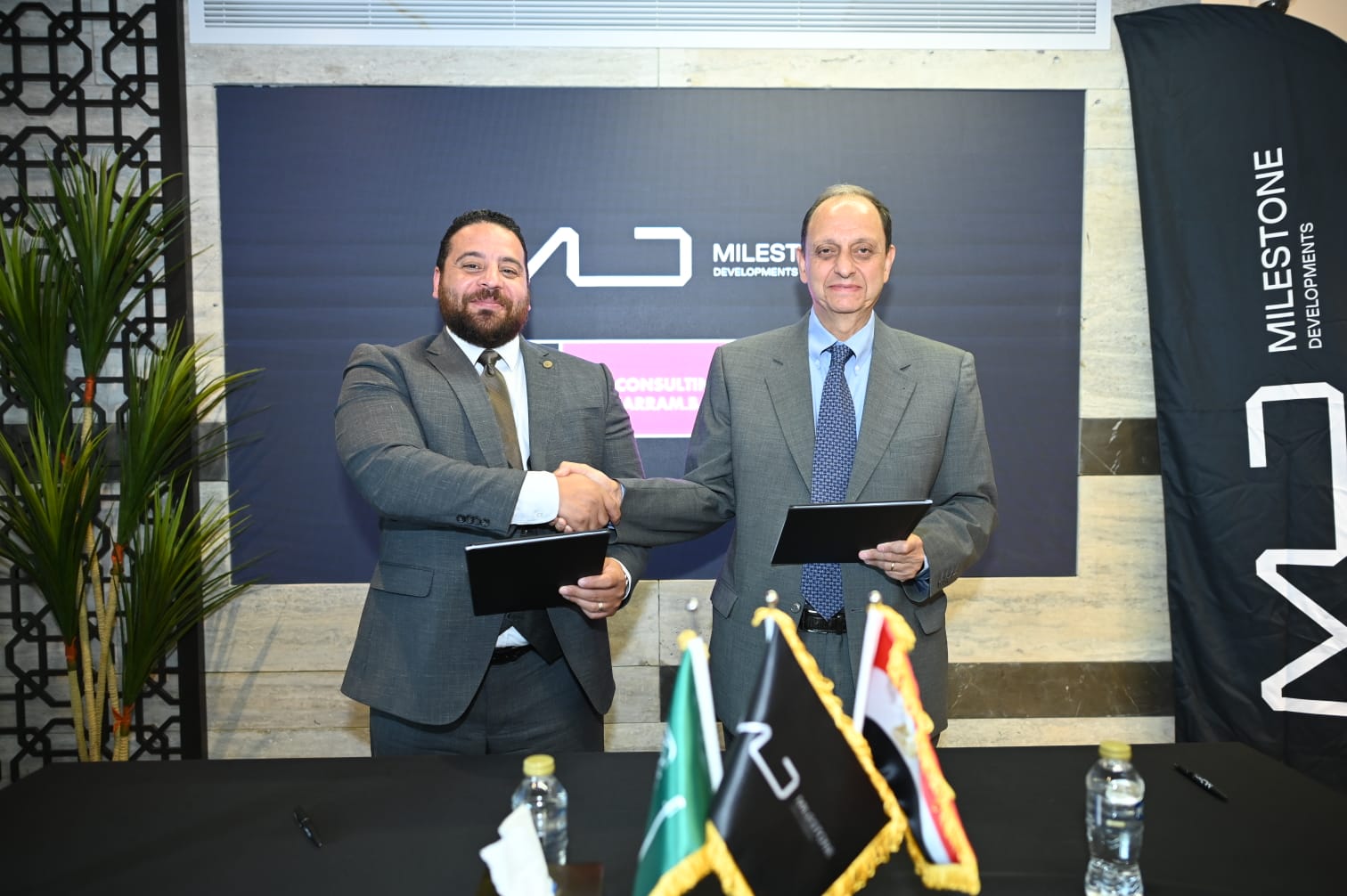
Milestone Developments opens permanent sales office in Riyadh to expand international client reach

Milestone Developments opens permanent sales office in Riyadh to expand international client reach

Milestone Developments establishes permanent sales office in Riyadh to support global expansion efforts

Milestone Developments launches permanent sales office in Riyadh to bolster the state’s real estate export plan

Milestone Developments, a subsidiary of Saudi Arabia’s Areej AL KhaleejGroup,

has announced the launch of a permanent sales office in Riyadh, Saudi Arabia.

This move is part of the company’s plan to contribute to the Egyptian government’s initiative to expand

real estate exports and promote Egyptian projects internationally.

Hatem Adel, Chief Commercial Officer at Milestone Developments,

stated that the company is targeting clients in Saudi Arabia,

including Egyptian expatriates residing in the Kingdom as well as Saudi nationals.

As part of its regional expansion, the company plans to establish multiple offices across the Gulf next year,

beginning with the Riyadh branch.

Adel noted that Egyptian real estate holds significant competitive advantages globally,

particularly with its appealing and competitive pricing,

alongside the continuous evolution of real estate products driven by Egypt’s comprehensive development plan.

Accordingly, expanding the international marketing of these projects strengthens their presence in the global market,

while also motivating Egyptian companies to innovate

and deliver the highest quality standards in their developments to thrive in this competitive landscape.

Ahmed Ahmed Dewedar, Sales Director at Milestone Developments,

said that the launch of the new office in Riyadh coincides with the Hazi Misr exhibition,

which will take place at the JW Marriott Hotel in Riyadh.

Milestone Developments’ participation in this exhibition is part of their strategy

to offer exclusive deals specifically for the Saudi market.

He explained that this new branch will be responsible for marketing the company’s projects in the Egyptian market

and will facilitate direct communication with clients to understand

and meet their needs regarding existing or future projects.

He noted that the company has ambitious expansion plans it aims to implement in the coming period.

Milestone Developments was established by Sheikh Zoaar bin Ayed bin Zoaar Al-Ajmi

and Sheikh Mohamed Zoaar bin Ayed bin Zoaar Al-Ajmi, a member of the Saudi-Egyptian Business Council,

and Nagy Ismail, Vice Chairman of the Board.

The company operates under the Areej Al Khaleej Group in Saudi Arabia and boasts a fully Saudi foundation,

with a strong portfolio of prominent companies in the Saudi market since 1979.

This portfolio, including Al Multaqa Real Estate and Areej Al-Khaleej Car Rental,

which collectively have 90 branches across the Kingdom,

as well as Mohammed bin Zoaar’s showrooms in Riyadh and other enterprises in diverse sectors.

Zoho Records 33% Revenue Growth in Egypt and Allocates $35 Million in a joint partnership with Fawry

Zoho Records 33% Revenue Growth in Egypt and Allocates $35 Million in a joint partnership with

Fawry to Digitally Empower Businesses

: Zoho Corp., a leading global technology company,

announced a remarkable 33% revenue growth and a 110% increase in its channel partners in Egypt since 2023,

highlighting the significant adoption of its business solutions.

This announcement was made during Zoholics Egypt 2024,

Zoho’s annual user conference, where Zoho Corp., and Fawry,

Egypt’s leading e-payments solution provider,

signed a Memorandum of Understanding (MoU) to accelerate the digitalization of Egyptian businesses,

where Zoho will allocate up to $35 million in wallet credits to support Fawry’s extensive network of 70,000 businesses,

empowering them to adopt digital tools that enhance operational efficiency and promote sustainable growth.

This partnership underlines both companies’ commitment to advancing Egypt’s digital economy and supporting

local enterprises with cutting-edge technological solutions.

Business Growth in Egypt

Zoho announced growth in its operations in Egypt,

achieving a remarkable revenue increase and significant expansion of its local partner network in 2023.

The growth comes as more businesses in Egypt seek to digitalize their operations, abandon costly competition,

and adopt the latest technology.

“Egypt’s vibrant market, with its abundant talent and innovative ideas,

presents a prime opportunity for businesses seeking to stay ahead of the curve.

Our products are ideally suited to help companies in Egypt drive efficiency,

enhance customer experiences, and achieve sustainable growth.

The remarkable market expansion Zoho witnessed this year underscores the increasing maturity of Egypt’s technology ecosystem and the strong demand for innovative solutions,”

said Hyther Nizam, President of Middle East and Africa (MEA) at Zoho.

This remarkable achievement underscores Zoho’s unwavering commitment to transnational localism,

a strategy that involves operating globally while deeply understanding and adapting to local markets.

By prioritizing the localization of its products and services,

Zoho has been able to address the specific needs and preferences of businesses in Egypt.

This strategic approach has enabled Zoho to build strong relationships with customers

and partners in the local market, fostering trust and driving sustainable growth.

Zoho’s top products in Egypt are Zoho One, Zoho Workplace, Zoho CRMPlus, Zoho People, Zoho Desk,

and Zoho Books.

Stemming from this strategy, Zoho also continues to offer localized customer support,

Arabic-supported apps, and flexible pricing plans tailored to the specific needs of local businesses.

The company’s localised pricing strategy ensures businesses can access Zoho’s services at a fair

and affordable cost without the added complexities of currency conversions or fluctuating exchange rates.

Empowering local businesses in Egypt

In a signing ceremony that took place during Zoholics Egypt, Fawry and Zoho Corp.,

signed an MoU marking a significant collaboration aimed at digitally transforming the business landscape in Egypt.

Through this strategic partnership, Zoho will allocate up to $35 million in wallet credits over the next few years,

enabling over 70,000 businesses in Fawry’s extensive network to embrace digital solutions.

The joint effort combines, Zoho’s comprehensive suite of cloud-based applications with Fawry’s

leadership in digital payments will provide new customers with wallet credit access of $500

(more than EGP 24,000) to utilize any of its 55+ applications free of charge for one year.

This initiative will not only make technology more accessible for businesses

but also accelerate their digital transformation by integrating Fawry Business’s digital payment solutions

with Zoho’s software tools.

Commenting on the MoU signing, Mohamed Kamel, Head of Business Development at Fawry,

said:”Fawry has always been at the forefront of advancing digital payment solutions for businesses in Egypt.

Partnering with Zoho allows us to expand our commitment to supporting local businesses by equipping them

with cutting-edge technological tools to enhance their operations and drive growth.

This collaboration reflects our commitment to fostering a digitally empowered business ecosystem in Egypt.

where businesses of all sizes can thrive in the evolving market.”

“Zoho is committed to empowering businesses globally through digital transformation.

By partnering with Fawry in Egypt, we aim to take part in accelerating the nation’s digitalization journey

and equipping businesses with the tools they need to succeed,”

said Premanand Velumani, Associate Director, Strategic Growth, MEA at Zoho.

“Our focus on creating tangible impact ensures that Egyptian entrepreneurs can innovate and grow without being

burdened by the complexities of operations. This also contributes to bringing about a more prosperous and

interconnected future for Egypt,” Velumani added.

This partnership between Zoho and Fawry represents a significant step towards fostering digital transformation

within Egypt’s business ecosystem.

By combining Zoho’s extensive suite of cloud-based applications with Fawry’s expertise in digital payment solutions,

both companies are dedicated to empowering local enterprises to operate more efficiently, scale sustainably,

and thrive in an increasingly digital economy.

Together, Fawry and Zoho aim to drive innovation and provide businesses

with the tools necessary to succeed in the evolving market landscape,

reinforcing their shared commitment to advancing Egypt’s digital economy.

Ericsson Microwave Outlook

Ericsson Microwave Outlook

Executive summary

High- and mid-band deployments, but especially the latter, will drive backhaul needs in the future.

As capacity requirements in mobile networks become more diverse, so will demands on backhaul transport networks.

In this year’s report, we have updated the backhaul capacity table structure to highlight variations in requirements

for several spectrum strategies and site types.

Coexistence with other radio services in parts of the 6–15 GHz range is a hot topic in backhaul spectrum,

in order to cater for increased spectrum needs for mobile networks.

Long-range microwave backhaul is essential in these bands, both today and in the future.

For example, around 30 percent of all transceivers are below 10 GHz in the countries studied,

but it varies per country from around 10 percent to more than 60 percent.

Microwave technology is continuously evolving to meet new requirements.

Modernized microwave planning and even more efficient spectrum use will play a significant role in achieving this.

It involves new key performance indicators (KPIs) and more balanced dimensioning that,

without negatively impacting quality of experience (QoE), can enable longer hop lengths,

higher capacity, improved energy savings and lower spectrum costs.

More aggressive frequency reuse enables wider channels, which results in higher capacity

and more efficient spectrum use.

Interference management in subnetworks can be a future step to enable prioritization between links and ensure

that links operate efficiently.

Security is a topic that is rightfully high on everyone’s agenda, and security in microwave networks is,

for the first time, covered in this report.

Microwave nodes are frequently located in remote, unsupervised locations which can be susceptible

to unauthorized access, and the possibility of eavesdropping, ingestion of manipulated software,

attacks via vulnerable third-party providers, hidden activities and denial of service attacks.

Communications service providers can mitigate these threats in several ways, as covered in the report

Backhaul capacity evolution

The expansion of 5G is continuing. It is now forecast to pass 4G to become the dominant mobile access technology

by subscription in 2028 and to account for 60 percent of all mobile subscriptions by 2029.

To date, around 300 service providers have launched commercial 5G services

and it is forecast that 75 percent of mobile data traffic will be served by 5G in 2029.

5G population coverage outside of mainland China has now reached around 40 percent,

but with large regional variations where some markets are at around 10 percent.

Global 5G population coverage is expected to increase significantly to up to 80 percent

by the end of 2029, creating the potential for significant user data throughput increases.1

In most markets, with the exception of Europe, mid-band population coverage matches 5G population coverage
reasonably well.

As 5G coverage increases, so will deployments of mid-band.

Today, high-band is more sparsely deployed and mainly found in the US.

Deployment of high-band will also increase, but more selectively than mid-band

and with a focus on urban environments.

In around 2030, we will see the introduction of 6G and this is expected to lead to more spectrum

being released in the mid- and centimeter wave (cmWave) bands pending decisions at World Radiocommunication Conference 2027 (WRC-27).

As it is too early for detailed analysis of these proposed new bands,

they are not included in this year’s capacity table.

For more on 6G spectrum, see the Ericsson white paper ‘6G spectrum – enabling the future mobile life beyond 2030’.2

Both mid-band deployments, with a large amount of spectrum and a high MIMO layer count,

and high-band deployments, will enable a significant increase in user throughput, driving backhaul needs.

Typical backhaul capacity requirements for distributed Radio Access Network (RAN) sites are shown in Figure 1.

The table shows how variations in backhaul capacity

requirements between regions, markets and service providers continue to be significant and are even increasing.

These variations are the result of differences in service provider spectrum holdings,

actual service provider spectrum deployments and deployed RAN features, such as carrier aggregation.

Increased deployment of mid-band is expected to have the largest overall impact on the network,

as it will be used in all regions and deployment areas.

Some of the reasoning behind the formulation of the table can be found in the Ericsson blog

‘Backhaul end-site capacity: Guesswork or science?’.3

As backhaul capacity needs in mobile networks become more diverse,

so will demands on backhaul transport networks.

Both high capacity and flexibility will be needed to cover lower-bandwidth deployments efficiently.

A thorough analysis of mobile network performance targets is key to finding the correct backhaul dimensioning


Spectrum, a shared gem

Microwave and millimeter-wave spectrums are key assets for the wireless backhaul of 5G,

and beyond, with around 10 million transceivers installed around the world.

Different frequency bands are used to provide critical transport network infrastructure in all areas,

from dense urban to deep rural areas, for ranges from hundreds of meters to beyond 100 km.

The traditional bands, 6–42 GHz, remain the backbone for (point-to-point) wireless backhaul, as shown in Figure 2

A remarkable journey

The E-band (80 GHz) has been on a remarkable journey over the last decade

and is now extensively used as a 5G backhaul band.

In recent years, there has also been a rapid maturation of radio technology for beyond 100 GHz.

Today, there are regulatory recommendations on channel arrangements,

ongoing equipment standardization and pre-commercial wireless backhaul equipment available

for trials in the W-band (92–114 GHz).

Both W-band and D-band (130–175 GHz) are untapped high-capacity spectrum

resources for the future wireless backhaul demand

Coexistence in 6–15 GHz

Spectrum is a scarce and very valuable resource.

Spectrum sharing and coexistence capabilities are becoming more important than ever

due to the demand for more spectrum for different types of wireless broadband use,

with technologies such as 5G/6G, Wi-Fi, satellite and wireless backhaul.

Opportunities for coexistence in parts of the 6–15 GHz range is the latest hot topic in backhaul spectrum,

as shown in Figure 2.

Access to spectrum can be achieved in different ways, such as through the ITU World Radiocommunication

Conferences (WRC), regional decisions, or decisions on a per-country basis.

Whichever method is pursued, harmonization of the selected frequency bands and technical conditions,

ideally on a global or at least a regional basis, is key to unlocking economies of scale

and to provide numerous benefits to consumers and enterprises.

Some countries have allocated 5.925–6.425 GHz (lower 6 GHz) for unlicensed use,

also known as license-exempt, including Wi-Fi and 5G NR-U (NR in unlicensed spectrum).


A few countries, such as the US, have expanded this allocation up to 7.125 GHz.

Although technical conditions have been established with the aim of protecting incumbent wireless backhaul,

introducing unlicensed use in a licensed backhaul band raises some concerns.

There continues to be debate about whether the backhaul is sufficiently protected in worst-case scenarios.

The Electronic Communications Committee (ECC) is also studying the impact of a bursty interference,

such as Wi-Fi beacon signals.

It remains to be seen what impact the growing use of unlicensed 6 GHz Wi-Fi

devices will have on the incumbent licensed wireless backhaul use

 And if interference issues arise, how will they be resolved,

as unlicensed spectrum is not controlled?

International harmonization

The WRC in 2023 (WRC-23) decided on an international harmonization of the upper 6 GHz spectrum,

6.425–7.125 GHz (or parts thereof), for International Mobile Telecommunications (IMT).

This is the generic term used by ITU for mobile systems, such as 5G.

The decision had support from countries representing 60 percent of the global population,

and more countries are expected to support this at the next WRC in 2027.

The intention of identifying a frequency band for IMT is to provide equipment manufacturers

with guidance on which spectrum may be made available for mobile services,

while leaving the final decision on implementation up to each nation

WRC-23 also decided on the agenda items for WRC-27.

One agenda item is to consider studies on sharing and compatibility

and develop technical conditions for the use of IMT, which includes the bands 7.125–8.4 GHz (or parts thereof),

and 14.8–15.35 GHz.

These bands have a large overlap with the 7, 8 and 15 GHz wireless backhaul bands (see Figure 2).

Notably, in addition to the decisions taken at WRC-23, an initiative in the US included 7.125–8.4 GHz

in the National Spectrum Strategy to be studied for wireless broadband use.

For more comprehensive information on 6G spectrum, see the Ericsson white paper.

Long-range wireless backhaul use

It is interesting to look at wireless backhaul use in the 6–15 GHz bands today,

as well as considering future demand.

These bands, especially 6–8 GHz, are essential for long-range wireless backhaul

due to their superior propagation characteristics for distances from about 20 km to beyond 100 km.

These are typically used in rural areas and for connecting them to urban centers.

A global and regional overview of the use of wireless backhaul spectrum

can be found in the Ericsson Microwave Outlook 2022,2 reporting around 10 million transceivers globally

National usage of wireless

backhaul spectrum Some countries have public data onwireless backhaul installations,

which can be used for a deeper analysis.

Figure 3 shows national usage of wireless backhaul spectrum in seven large countries around the world.

The size of each circle represents the installed base of transceivers,

with in total more than 1 million for these countries.

There are large variations in how much each backhaul band is used in different locations,

countries and regions.

Many of the bands are used in most countries, but the relative use varies.

For example, 30 percent of all transceivers in Figure 3 are used for the essential long-range bands in 6–8 GHz,

but it varies per country from around 10 percent to more than 60 percent.

This depends on the local demand and historic decisions on what

is the most valuable use of a frequency band in each region and country.

One example is the 11 GHz band, (10.7–11.7 GHz),

which some countries have prioritized for extensive wireless backhaul use,

while others have prioritized it for uncoordinated satellite earth station (receiver) use with no,

or very restricted, wireless backhaul use.

Figure 4 shows a useful geographical overview of the wireless backhaul deployments

for the bands in each of these countries.

Each red line corresponds to a point-to-point wireless backhaul link.

The 6–8 GHz bands, or parts thereof, are used for long-range wireless backhauling in all parts of these countries,

except for the most remote rural areas where there are few people and no terrestrial transport networks.

The 10–15 GHz bands are useful for shorter distances and therefore are used closer to urban centers.


Importance of coexistence

How much these bands are used also depends on the penetration of fiber transport networks in these countries and areas.

Even if there are many advantages of fiber transport,

it is simply too costly and not sufficiently reliable to be used in all locations.

Spectrum in the 6 GHz band, as well as 7–15 GHz bands, is being considered

by national regulators for the future growth of mobile networks.

Notably, mobile systems are less challenging in terms of coexistence with incumbent wireless backhaul,

which is in fixed known locations, uses passive antennas with very narrow beamwidths,

and features such as automatic transmit power control (ATPC) that further reduce any interference.

The licensed nature of mobile and backhaul allows for coordination, including geographical coordination.

Conclusion

Wireless backhaul is a somewhat “unsung hero” that has helped to enable the current global communication
networks.

It is important to carefully consider the extensive

and essential use of long-range wireless backhaul in these bands – today, as well as tomorrow.

Introducing unlicensed use raises many concerns, while there are opportunities

for coexistence with licensed mobile systems.

It is expected that the most valuable use of a frequency band will also, in the future,

vary in different regions, countries and locations.

Trusted microwave networks

The security of a microwave transport network can be compromised in a multitude of ways.

For example, full network access could be mistakenly given to contract workers hired

to do a limited site upgrade. Perhaps a disgruntled former employee has access to team login credentials.

A curious hacker could be exploring known Linux/open source vulnerabilities.

Or, accidental access could be obtained by a used equipment trader

who logs in to scrapped equipment that contains network information by testing default login credentials.

In recent years, the industry has responded to these potential risks by initiating

and increasing focus on implementing vulnerability management processes

and developing secure software and hardware architectures.

The active involvement of standardization bodies, such as the National Institute of Standards

and Technology (NIST) and the Cybersecurity and Infrastructure Security Agency (CISA) in the US,

and the National Cyber Security Centre (NCSC) in the UK,

has also resulted in recent releases of various requirements and documents for network security.

Threats and their mitigation in microwave networks

In Figure 5, the architecture of a 3GPP mobile network is shown, consisting of a Radio Access Network (RAN)

with radio units (RU), distributed units (DU) and central units (CU) deployed in local sites,

and the Core network deployed in a handful of national locations.

The RU, DU, and CU are often located in unsupervised sites that may be exposed to unauthorized access,

while the Core network is placed in high-security, data center-like locations.

The transport network connects the RAN with the Core network

and often consists of a mix of physical technologies,

such as optical and microwave links that are able to cover long distances with many nodes.

The nodes are frequently located in remote,

unsupervised locations which can be susceptible to unauthorized access,

thereby providing possibilities for eavesdropping, ingestion of manipulated software,

attacks via vulnerable third-party providers (3PPs), hidden activities and denial of service attacks (Figure 6).

Unauthorized access

In this article, an unauthorized access event is defined

as one where a user without access rights gains admission to information

or configuration rights in a node or a network by having access to physical hardware or login credentials.

To mitigate this, it is essential to implement strong access control policies with a centralized authentication process

requiring individual, strong passwords that are frequently updated,

and for this to be combined with multi-factor authentication.

Future enhancements are being discussed across the industry to make it more difficult

for external sources to access unauthorized information directly through physical hardware.

For instance, to prevent intrusion by probing memory chips

or the communication lines between different chips on a printed circuit board,

the hardware should be built on a trusted hardware architecture.

The intent is that components in the system should have a wall of protection against

other components in the system, which prevents unauthorized access to the complete system

if one component becomes implicated.

This could, for example, mean that communication between hardware components is encrypted and that data is authenticated.

An intuitive way to understand the difference between a common hardware architecture

and a trusted hardware architecture is a comparison between a coconut and a pomegranate.

The coconut has a hard shell protecting the content inside but once the shell is penetrated,

it is possible to access its content. The pomegranate, on the other hand,

has protective shells around all components within its outer shell.

Eavesdropping

The signal in a microwave network is similar to the signal from the RAN,

propagating through an unprotected medium, namely the air,

but it is still a rather complex task to intercept the traffic in mid-air.

It requires detailed knowledge about the transmitted signal such as the frequency, modulation,

data rates and coding of the transmitted data, which is proprietary to each vendor.

Still, data encryption is recommended to protect the network from eavesdropping.

  End-to-end encryption, specifically encryption and decryption in the Core network and the RAN nodes,

is the recommended solution.

It is also transparent to individual proprietary link technologies,

ensuring the information remains encrypted throughout the full transport network.

Another option for microwave is radio link encryption, which encrypts the signal

and provides the benefit of being impossible to detect if or when the radio link is being used.

However, if only radio link encryption is used,

there is still a vulnerability at each node where decrypted information may be monitored

if an unauthorized user is getting access to the node.

Hence, the recommendation is to have end-to-end encryption

with the option to add radio link encryption to protect the network even further.

Manipulated software

A complex threat involves the intentional manipulation of firmware running on microwave nodes.

To address this, the microwave vendor must secure software integrity through automatic

or manual updates of software from trusted sources, using secure protocols.

Furthermore, it is important to implement solutions that can secure the trust of the updated software,

such as ensuring users of systems can be certain that downloaded and booted software is not altered in any way,

and that it is digitally signed by the microwave vendor.

Attacks via vulnerable 3PPs

Nowadays, 3PP software components, such as Linux distributions and 3PP network stacks,

are an integral part of modern software development.

Vulnerability management – including control, tracking, assessment of impact

and mitigation of known and recently detected vulnerabilities in the 3PP software components – is, therefore,

crucial, as information about these vulnerabilities can quickly spread and provide simple

and straightforward opportunities for attackers to target and explore.

Microwave vendors should have a clear strategy for discovering,

tracking and addressing vulnerabilities in their equipment as part of their product development life cycle

and a well-defined process for sharing known vulnerabilities with service providers.

This strategy must comply with standards such as the 3GPP Network Equipment Security Assurance Scheme,

monitored by organizations like GSMA

Hidden activities/unawareness of changes

To limit the impact of an intrusion, it is of the utmost importance to detect attacks and security vulnerabilities as soon as possible.

One example is the detection of intentional or unintentional changes in security settings

that may lead to malicious activity, such as hidden configuration changes of the node.

To mitigate this, it is necessary to support security event logging on the microwave nodes,

which enables visibility of security events and activities.

Denial of service (DoS) attack

In a DoS attack, a node is flooded with requests, the aim being to make the node inaccessible

and thereby impact network performance.

To mitigate this, microwave nodes should have the ability to enable policies in the control plane

to prevent the build-up of request queues, which ensures that the network node continues to operate.

One option for achieving this could be a policy allowing the service provider to

configure a quality-of-service filter that manages the traffic flow of control plane packets

to protect the microwave node.

Securely configured microwave nodes are essential for the proper operation of microwave networks,

and both vendors and service providers play vital roles in ensuring that the necessary security functions

and hardening measures are in place.

Conclusion

This article provides insights into the rapidly evolving security landscape and highlights some common security
threats and their mitigations,

which are summarized in Figure 7.

Service providers can mitigate these threats through diligent security configurations,

and should also consider security features when selecting hardware.

Future security improvements may involve changes in trust boundaries, requiring comprehensive security design

and secure communication between internal platform components.

Overall, building reliable microwave networks requires both collaboration

and standardization to address security challenges and enable swift adaptation to evolving security requirements

The future of microwave planning

Microwave technology is evolving continuously to meet new requirements set

by the latest generations of radio access technologies and new use cases.

As capacity boundaries are pushed further, it is important to maintain sustainable requirements

which involves more balanced dimensioning.

Additionally, access to more spectrum, wider channels and high spectrum efficiency are key for achieving higher capacity.

More aggressive frequency reuse combined with interference management is a way to improve spectrum efficiency.

Benefits of more balanced dimensioning

Traditional microwave planning methods date back to the introduction of circuit-switched 2G (GSM) networks,

which were mainly deployed to provide voice services to mobile users.

The first generation of microwave links used a single, fixed modulation,

and it was therefore natural to plan the links based on strict availability targets.

This meant that a link should have a high likelihood of supporting the voice services it carried –

some 99.999 percent of the time – since if the link was down, then voice services were also down.

With the adoption of packet-switched networks for data in 3G, together with adaptive coding

and modulation (ACM) in high-capacity microwave links,

the need for such extreme availability for all ACM levels became unnecessary.

Instead, differentiated availability with different availability targets for different ACM levels became more significant.

In practice, differentiated availability means that lower modulation levels have higher availability targets

than the higher modulation levels.

A high availability target (for example, 99.99x percent) on a committed information rate (CIR)

ensures that services like voice and other high-priority service and control operations are guaranteed,

while a lower availability target on peak information rate (PIR) allows for traffic peaks

that occur more rarely.

It is also not uncommon for it to be the radio access network (RAN)

that limits the bitrate and the user experience due to phenomena such as radio channel fading

, shadowing and interference.


A good strategy, therefore, is to dimension the microwave backhaul in balance

with the RAN traffic it carries to avoid unnecessary overprovisioning of the backhaul.

Excessively strict availability targets limit the possible use cases of microwave backhaul links.

By contrast, a well-balanced dimensioning opens several possibilities, including longer hop lengths,

higher capacity, energy savings and use of higher sub-THz frequencies.

As a step toward a more balanced backhaul dimensioning, ETSI ISG mWT has defined a new KPI called backhaul traffic availability (BTA).

Put simply, BTA is defined as the probability that the backhaul link capacity supersedes

the RAN traffic it carries, which is the same as the probability that the link is uncongested.

The BTA thus depends on the probability distributions of the backhaul link capacity and the RAN traffic.

BTA applies to all frequency bands, but it is especially interesting for E-band

and future sub-THz links since it leads to higher capacity over longer hop lengths,

both in single- and multi-band configurations.

The need for higher capacity over longer hop lengths is demonstrated

by the growing deployments of multi-band links.

On the topic of KPIs, standardized ITU-T definitions of user QoE also exist for different services.

QoE is defined by a service-specific function of user rates and delays in the user downlink

and uplink, and are typically represented by a QoE rating ranging from 1 to 5,

where, for example, 4.5–5.0 is excellent, 3.5–4.5 is good, 2.5–3.5 is fair, and so on.

Balanced dimensioning in action

To illustrate the benefits of more balanced backhaul dimensioning,

a simulation was conducted of a 5G RAN in the 3.5 GHz band serving mixed traffic types like video-on-demand,

web-browsing, live streaming, cloud gaming and augmented reality (AR).

The RAN comprised three sites with three sectors each,

with the aggregated traffic from all sectors being transported over a multi-band backhaul
link combining E-band and 18 GHz band in the Gothenburg, Sweden, rain zone.

The traffic load in the RAN varied between low (20 percent), medium (50 percent) and high (70 percent) utilization,

where utilization is set by the number of users within each user type,

with the AR users being the most resource demanding.

Figure 8 shows the result from the simulation investigating

the effect of BTA on QoE of AR users and the maximum possible hop length of a multi-band backhaul link.

The left y-axis shows the percentage of ideal QoE for AR users.

Ideal QoE means the maximum possible QoE attained by using an ideal backhaul that does not have any impact on user QoE.

Ideal backhaul can be interpreted as a backhaul with infinite capacity and 100 percent availability.

The ideal QoE, therefore, only depends on the performance of the RAN and not the backhaul.

The blue curve represents how a large fraction of the ideal QoE is attained

by using a multi-band backhaul link instead of an ideal backhaul.

For example, 99 percent of the ideal QoE for AR users implies that the QoE

for AR users is 99 percent of the maximum possible QoE attained by using an ideal backhaul.

It can be argued that this is an insignificant reduction from the maximum QoE

 and that the AR users will not experience any negative impact during their sessions.

The right y-axis shows the maximum hop length of the multi-band backhaul link

as a function of BTA for the different RAN traffic load levels. The x-axis is common for all curves

and represents the BTA as defined by ETSI ISG mWT.

The lower the BTA, the higher the likelihood of congestion in the backhaul, and user QoE reduces correspondingly.

However, if a lower BTA and a correspondingly lower QoE is accepted,

then the maximum hop length can be increased. This is illustrated by some of the operating points in Figure 8,

where there is a clear connection between QoE, BTA and hop length. Take,

for example 99.9 percent of ideal QoE, which in the simulated case, corresponds to a BTA of around 99.98

percent at high load and is attained by a maximum hop length of 12.5 km

(which is illustrated by the purple arrows).

If 99 percent of the ideal QoE (corresponding to 99.77 percent in BTA) is accepted instead,

the maximum hop length can be more than doubled, to 27.5 km (which is illustrated by the green arrows).

In the ETSI Group Report, it is indicated that the optimum range for BTA values is between 99.5 percent

and 99.9 percent, but it is also recognized that the final choice is

up to the preferences of individual service providers and the needs of specific services.

It is important to emphasize that more balanced dimensioning

does not imply an increased risk of outage of critical services,

since the CIR is still associated with a high availability target like 99.99 percent to 99.999 percent.

It is rather that the PIR is associated with a more balanced availability requirement that matches the BTA.

When it comes to multi-band backhaul links like the one used in the simulation example,

CIR is provided by the low-band link while the PIR is provided by the E-band link.

It means that relaxing the PIR availability requirement of the E-band link only has a very minor,

if any, negative effect on user QoE while effectively resulting in more than two times longer hop length

Opportunity with interference management

Modern microwave links are very spectrally efficient, meaning that they provide many bits per second per Hertz (bps/Hz).

High spectral efficiency is ensured by successfully employing techniques like high-order modulation,

high-performance dual-polarized antennas (XPIC) and multiple-input, multiple-output (MIMO).

Microwave links also operate in regimes with high signal-to-noise ratio (SNR) thanks to efficient power amplifiers,

high-gain antennas and high receiver sensitivity.

This means microwave links are what is known as bandwidth-limited, meaning that their capacity is more limited

by the spectrum bandwidth than by their SNR.

Capacity grows linearly with bandwidth but only logarithmically with SNR,

which implies that it is more spectral-efficient to try and increase the bandwidth instead of SNR

when the link is in the high-SNR regime.

This is exactly what universal frequency reuse – or frequency reuse one (FR1) – sets out to achieve.

In FR1, all (or at least a majority of) links use the same frequency channel to allow wider channels to all links.

For example, instead of allocating four neighboring links a separate 28 MHz channel each,

they can all use the same 112 MHz channel which increases their possible peak rate by a factor of four.

The downside of using the same frequency channel is increased interference between the links.

However, since the links are in the bandwidth-limited regime,

the upside of more bandwidth is much larger than the downside of increased interference.

As with balanced dimensioning and BTA, a more relaxed availability requirement on peak rate has little,

if any, impact on user QoE.

Local traffic-aware transmit power control is an efficient way to limit interference between links in an FR1 network.

Traffic varies over both space and time across the network,

and local traffic-aware power control continuously adapts the transmission power of each link to the minimum

power needed to serve its immediate traffic needs.

This way, unnecessary interference is avoided in the network compared to using a fixed output power

or some other traffic-unaware power control.

Previous Microwave  Outlook reports have shown

the large benefits of this type of local traffic-aware power control in FR1 networks.

However, if the interference between neighboring links is large, then the links may start competing for capacity

by raising their transmission powers in an uncontrolled manner, and such situations need to be avoided.

One simple way of avoiding power rushes is to consider this issue in the initial network planning phase,

for example, by setting caps on the maximum permitted transmission power of each link in the network based on interference models.

Another, more sophisticated way is to employ interference management

by using centralized power control combined with traffic prioritization.

For example, if multiple interfering links are competing for capacity

but one of them carries higher priority traffic than the others,

then a centralized controller can allocate or schedule more capacity to the high-priority link.

Many links also have a natural isolation between them, which limits the interference

and the need for centralized interference management. This isolation is mainly provided

by the narrow-beam antennas with low side-lobe levels.

To illustrate isolation between links and how many links may need centralized interference management,

the use of FR1 was simulated in a real backhaul network

with a very dense deployment of microwave links.

The simulation was used to investigate how to divide

the complete network into subnetworks based on interference levels.

The principle was simple: if two or more links interfered with each other over a predefined interference-to-noise (I/N) threshold,

then the links were allocated to the samemulti-link subnetwork.

If a link was not transmitting/receiving too much interference to/from other links,

then it could operate independently of all the other links in a single-link subnetwork.

Centralized power control and interference management is only required

when links in the multi-link subnetworks start to compete for capacity.

Figure 9 shows how a large share of the total links in a dense network, with close to 1,000 links operating

at 15 GHz, is allocated to single- or multi-link subnetworks.

In this example, the antenna size was 0.6 meters,

and the availability target was 99.99 percent at 1024 QAM.

Two I/N thresholds were assumed, -6 dB and 0 dB, respectively.

The higher the I/N threshold, the higher the number of links that can operate independently in a single-link subnetwork.

Meanwhile, a stricter (or lower) I/N threshold means that more links need to be allocated to multi-link subnetworks.

To illustrate the effect of using more narrow-beam antennas to provide more isolation between links,

the same network deployment was also simulated with E-band links.

Figure 10 shows the share of total links allocated to single-link and multi-link subnetworks,

respectively. The narrow beam of the E-band antenna provides very good isolation between links,

which significantly reduces the need for centralized interference management since only 14 percent

and 8 percent (at the two different I/N thresholds) of the total number of links belong to a multi-link network.

This can be compared to the 15 GHz network in Figure 9,

where the equivalent shares were 83 percent and 65 percent, respectively

Conclusion

Modern microwave planning involves new KPIs and more balanced dimensioning

that can enable longer hop lengths, higher capacity, energy savings and lower spectrum costs,

without negatively impacting user QoE.

More aggressive frequency reuse, such as FR1, enables wider channels resulting in higher capacity

and more efficient spectrum use.

Interference in dense FR1 networks can be reduced effectively

by using local traffic-aware power control in all frequency bands.

The benefit of centralized interference management is more pronounced in the lower bands

than in E-band networks, as these have more isolation between links

which suffices for the use of local traffic-aware power control.

The TriFactory organized “Tough Mudder Challenge” at Sodic East

With the participation of 1000 Athlete from 30 Nationalities The TriFactory organized “Tough Mudder Challenge” at Sodic East

Friday, October 18th, 2024 – The world-renowned obstacle course challenge,

Tough Mudder, returned once again on Friday, October 18th,

bringing high-energy excitement to SODIC Sports Club at SODIC East.

Organised by The TriFactory, this year’s event was proudly hosted by SODIC East

and saw participants of all ages pushing their limits throughout an exciting 5K course,

featuring 17 world-class obstacles.

وزارة الشباب والرياضة

Tough Mudder, celebrated internationally for its emphasis on physical strength,

mental grit, teamwork, and camaraderie, has been a staple event in Egypt since its introduction to the Egyptian market by The TriFactory in 2019.

This year, participants were once again pulled out of their comfort zones,

facing obstacles designed to challenge them both mentally and physically.

“We are thrilled to have brought Tough Mudder to SODIC East for the first time,

” said Ayman Hakky, Founder & CEO of The TriFactory.

“It’s always a pleasure partnering up with SODIC

and we are very happy with the turn-out in our very first edition at SODIC East.”

With a strong focus on teamwork and overcoming challenges,

the event attracted a diverse range of participants, from professional athletes to first-time mudders,

all coming together to conquer the course and cross the finish line.

The 5K course proved to be a demanding challenge,

welcoming those aged 13 and above.

The event was organised under the auspices of the Ministry of Youth & Sports,

which has consistently supported Tough Mudder since its introduction to Egypt.

The collaboration with SODIC East as the title sponsor added a new dimension to the event,

showcasing one of East Cairo’s most exciting new destinations

and enhancing the overall experience for all attendees.

In addition to the action-packed obstacle course race,

the event featured a vibrant atmosphere with music, food vendors,

and interactive sponsor booths, making it a perfect day out for participants and spectators alike.

As Tough Mudder continues to grow in popularity across Egypt,

The TriFactory looks forward to building on this year’s success

and exploring new opportunities for collaboration with SODIC East

and other partners in future editions.

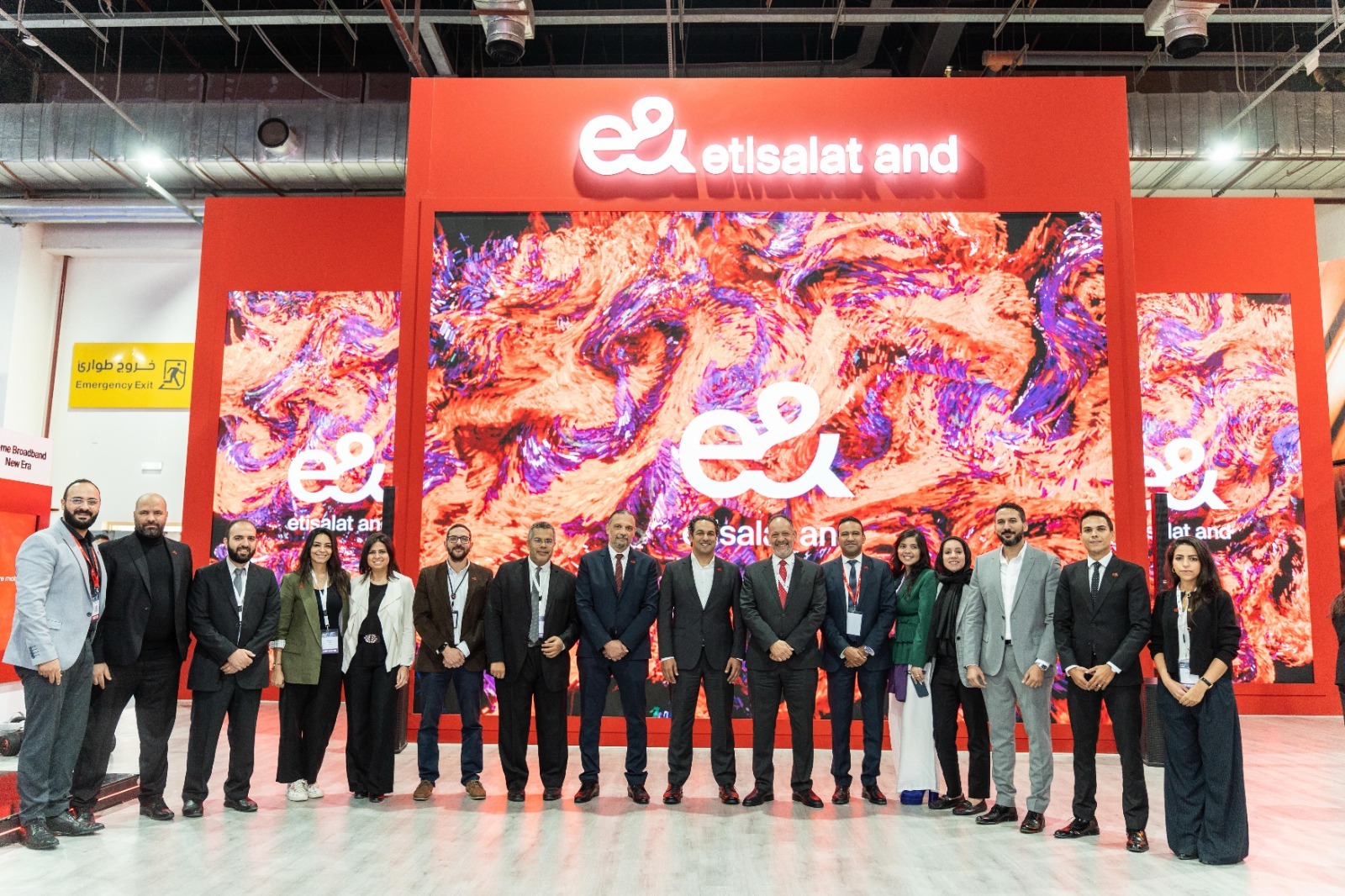
e& Business Egypt Participates at GITEX Global 2024

e& Business Egypt Participates at GITEX Global 2024, Showcasing Cutting-Edge Digital Solutions

Cairo, October 17, 2024: e& Business Egypt, e& Egypt’s enterprise arm,

has made a significant mark at GITEX Global 2024, one of the largest global tech exhibitions,

from October 14 to 18.

The unveiling of its bold new identity at GITEX Global 2024 is a testament to e& Business Egypt’s evolution

and commitment to delivering innovative digital solutions that drive performance

and accelerate clients’ digital transformation journeys.

As part of e&, the parent company’s evolution into a comprehensive tech conglomerate,

e& Business Egypt aims to deliver a broad spectrum of solutions,

from advanced technology infrastructure to specialized software services. At GITEX Global,

e& Business Egypt showcased solutions designed to address businesses’ changing needs,

highlighting its relentless focus on innovation, service excellence, and digital readiness.

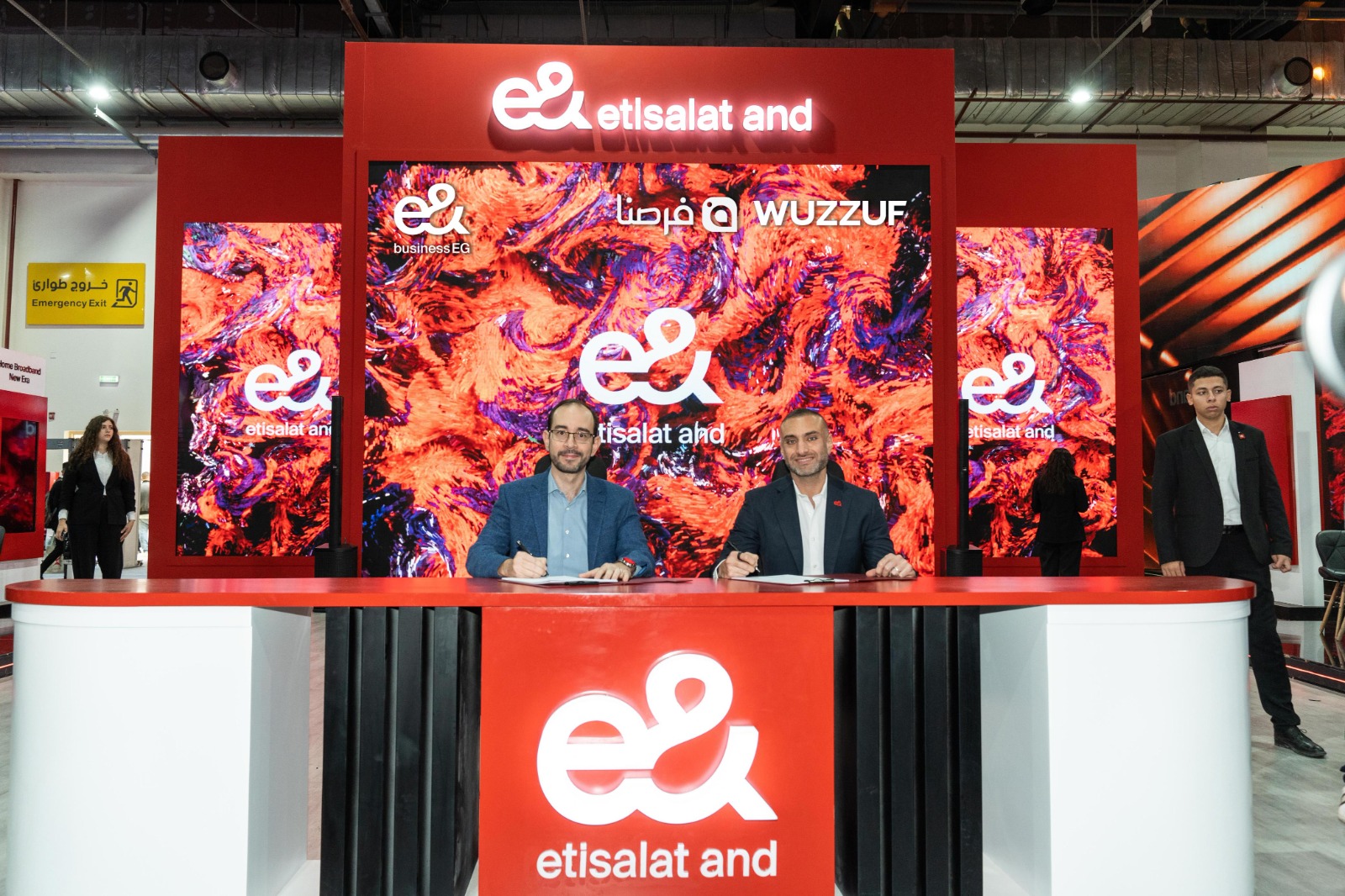
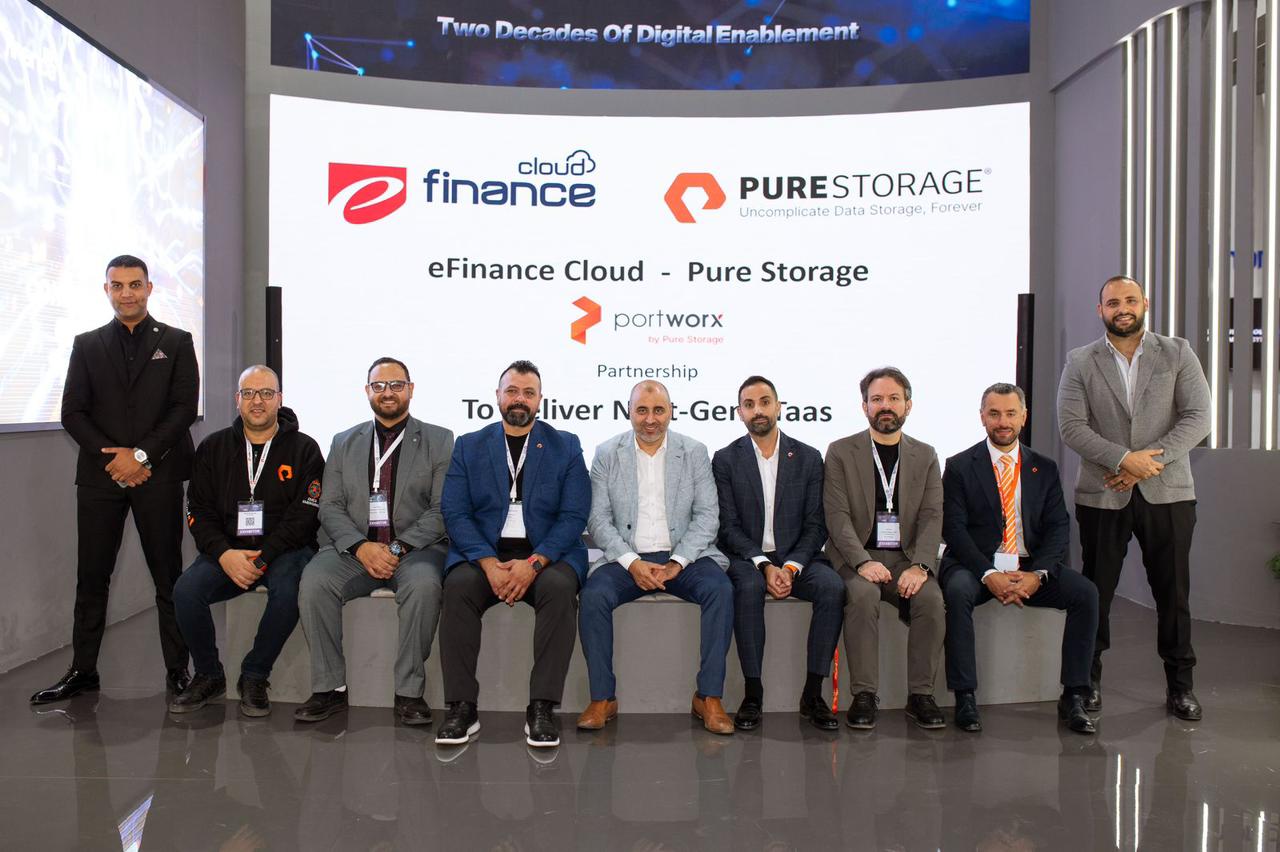
During the exhibition, e& Business Egypt signed several strategic partnership agreements with prominent local

and international companies. These agreements reinforce the company’s commitment to growth

and underscore its dedication to expanding alliances and boosting its presence in the technology market.

Attendees explored the company’s latest offerings in Artificial Intelligence (AI),

data analytics, cybersecurity, and cloud solutions—all geared to enable businesses to stay competitive

and future-proof their operations.

e& Business Egypt also debuted the beta version of its game-changing application, “Instabusiness.”

This user-friendly app is designed to revolutionize how businesses engage with e& Business Egypt’s services,

providing a simplified experience offering various features to support business growth.

Alongside this, the company revealed its fully revamped website,

offering a glimpse into its future vision for managing businesses in an era of rapid technological change.

Sherif El-Khouly, Chief Business Officer at e& Egypt,

expressed his enthusiasm about the company’s participation at GITEX Global, stating:

“GITEX Global is a world-leading platform that brings together the most innovative technology under one roof.

We are excited to be part of this event, which gives us a unique opportunity to strengthen our partnerships and

 showcase our technical expertise”.

“At e& Business Egypt, we believe technology is the key driver of growth and innovation.

That’s why as a tech aggregator, we are committed to developing integrated digital solutions

that improve our client’s performance and facilitate their digital transformation,

helping them achieve their business objectives with greater efficiency and impact,” he added.

e& Business Egypt is positioned as a leader in driving the future of digital transformation

for businesses in the region and worldwide,

further solidifying its status as a critical player in the global technology landscape.

GITEX GLOBAL and Expand North Star set to accelerate world’s AI

GITEX GLOBAL and Expand North Star set to accelerate world’s AI

economy with market projected to reach $2.7 trillion by 2032

 Event billed as a catalyst for redefining the world’s digital economy and AI ecosystem

under this year’s ‘Global Collaboration to Forge a Future AI Economy’ theme

Photo caption: GITEX GLOBAL 2024 will present its most international edition with

record-breaking participation from Europe, Asia, and Latin America

Dubai, United Arab Emirates – 12 October 2024: GITEX GLOBAL, the world’s largest

tech and startup event, takes centre stage in the UAE next week with this year’s 44th edition

destined to redefine the world’s digital economy and AI ecosystem.

Held at Dubai World Trade Centre (DWTC) from 14-18 October, the incomparable

international showpiece will be more influential than ever this time around – presenting an

expanded events programme that transforms the UAE into an AI universe epicentre.

Under the theme “Global Collaboration to Forge a Future AI Economy”, GITEX GLOBAL

2024 welcomes the world’s largest technology enterprises alongside governments,

investors, experts, startups, academia, and researchers.

Expand North Star, the world’s largest startup and investment show, runs concurrently at

Dubai Harbour from 13-16 October – hosted by Dubai Chamber of Digital Economy and

organised by DWTC.

With over 6,500 exhibiting companies, 1,800 startups, and 1,200 investors from more than

180 countries participating across 38 halls of innovation and business opportunities, these

blockbuster events will see the UAE “strategically propel the next generation of AI-driven

technologies”.

Trixie LohMirmand, Executive Vice President of DWTC, the organiser of GITEX

GLOBAL and Expand North Star, said: “At GITEX GLOBAL in Dubai, we shall close the

year with significant manoeuvres from our tech community by doubling down on global

collaborations and intensive engagements amongst all involved. Through these efforts,

we shall forge competitive advantages in the race towards regional and international digital supremacy.

“With international participation in GITEX GLOBAL 2024 rocketing by almost 40 per cent,

it’s a barometer of the unstoppable ambitions of many young rising digital nations

who are now confidently forging their ways into the future global AI economy through GITEX.

As the world’s most global tech event brand with events in Germany, Singapore, Morocco,

and Nigeria alongside Expand North Star, we are committed to strategically propelling the next

generation of AI-driven technologies via startups, scale-ups and unicorns.

Photo caption: Tech ecosystem to gather in Dubai for the 44th GITEX GLOBAL fostering collaborations for the future AI economy

A global agenda for tomorrow’s AI economy According to Fortune Business Insights,

the global AI market is projected to reach $621 billion in 2024 and soar to $2.7 trillion by 2032.

Given its influence and impact now and in the future,

the technology takes centre stage at GITEX GLOBAL 2024 with over 3,500

enterprises presenting the latest breakthrough innovations in AI, IoT, data,

and the cloud.Amongst them is TECOM Group PJSC, which celebrates its 25th successive year

at GITEX GLOBAL next week. Ahead of the event, Ammar Al Malik,

Executive Vice President of Commercial at TECOM Group PJSC and Managing Director of Dubai

Internet City, said: “Dubai’s pro-innovation frameworks are the bedrock of tech

advancements that serve a greater purpose. GITEX GLOBAL is a springboard to unlock this potential,

and as the region’s leading tech hub, Dubai Internet City has been a proud partner for decades in its mission

towards a brighter future. Our community is pleased to connect

innovators from more than 3,500 companies across fields like artificial intelligence (AI),

Web3, digital transformation, and beyond to realise this vision.”

Abu Dhabi’s most influential companies and organisations, including the Advanced

Technology Research Council (ATRC) and G42 Group with its leading enterprises Presight

and Khazna, will reinforce the Emirate’s position as an emerging global AI nexus. Other tech

giants participating are Adobe, Alibaba Cloud, AWS, Builder Ai, Dell, Google, Honeywell,

Huawei, IBM, Lenovo, Microsoft, Nvidia, Oracle, Salesforce, SAS, solutions by STC, and

Tech Destination Pakistan. Presenting the year’s largest AI event,

GITEX GLOBAL will deliver 120-plus hours of AI and deep tech-focused content across various topics,

facilitating discussions on the implications

of AI in Future Health, Digital Finance, and EdTech. Following the wildfire pace of AI

adoption and the unprecedented growth in data storage demand, the event is also launching

the region’s largest Data Centre Symposium in 2024, featuring the industry leaders

Datalec, Kerno, Khazna, Legrand, NTT Data, Schneider Electric, Vertiv, among many others.
The programme will build anticipation ahead of the all-new AI Everything Global 2025.

This event – taking place in Abu Dhabi (4 February) and Dubai (5-6 February) will gather some

of the world’s most visionary AI tech companies to construct an innovative, fair,

and responsible AI industry of the future. Fast-tracking the next generation of startups
The world’s largest startup and investment event,

Expand North Star will foster the next frontier of tech and innovation.

In another record-breaking edition, the event will connect the most innovative global founders with new markets,

enterprise customers, and an influential pool of investors and venture capitalists with over $1.2 trillion in Assets

Under Management (AUM). These include SOSV, Bessemer Ventures, Lightrock, Sinovation Ventures,

and the European Innovation Fund. Additionally, Expand North Star will seek to redefine the future of money, blockchain,

and creativity through leading co-located events GITEX Impact, Fintech Surge,

Future Blockchain Summit, and Marketing Mania. Accelerating the next generation of scaleups,
the world’s largest start-up pitch competition, Supernova Challenge 2.0,

also graces GITEX GLOBAL with the winners claiming a share of the $200,000 prize pool.

Historic international involvement GITEX GLOBAL 2024 will welcome the highest international attendance in its history,

welcoming over 400 government and digital development agencies from around the world.

Alongside GITEX GLOBAL regulars, the new nations debuting this year will showcase their latest groundbreaking tech innovations.

Next week marks the largest European participation at GITEX GLOBAL with over 35 European countries exhibiting alongside 1,000-plus SMEs and 450-plus startups

from debuting countries, including Austria, Bosnia and Herzegovina, Ireland, Latvia, Lithuania,
Portugal, Serbia,

and Slovenia. Many rising digital nations from Latin America are also behind

the record-breaking international involvement, as are those from Central and Southeast Asia.

Joining long-time GITEX GLOBAL participants such as China, Japan, South Korea,

and India are several debutants – Singapore, Malaysia, Kazakhstan,

and Kyrgyzstan amongst them. While promoting international business development, entrepreneurship,

and investment engagements to benefit enterprises, organisations, and SMEs alike, GITEX GLOBAL

welcomes the European Innovation Council for the first time, Europe’s biggest deep-tech investor.

It will also see significant collaborations with global organisations from all continents,

such as the European Innovation Council, Tech Destination Pakistan, IE University,

University College London (UCL), Johns Hopkins University, the Massachusetts Institute of Technology

(MIT), and key corporate ventures from leading tech enterprises such as Sony, Honda,

Standard Chartered, QIC, and many more. An action-packed agenda Throughout its six-day duration,

GITEX GLOBAL will become a microcosm of the world, launching industry-defining programmes

such as GITEX Editions, an exclusive platform for late-stage advanced tech companies and a premier hub for unicorns, soonicorns and rhinos.

In 2024, the event will connect 59 top global unicorns, such as Axelera, DeepL, Insilico Medicine, and Synthesis AI.

The World Future Economy Digital Leaders Summit is another must-attend show with global innovators

and influential leaders set to address critical priorities shaping the future of technology.

Additionally, GITEX Cyber Valley is this year’s most anticipated cybersecurity

showcase – hosted by the UAE Cyber Security Council. With specialists forecasting that damage costs

could reach $10.5 trillion annually by 2025, the show will present a power-packed conference agenda as the world’s

most influential CISOs, CIOs, and GRC leaders to discuss the risks of global cybercrime.

Leo Chen, Corporate Senior Vice President & President of Enterprise Sales at Huawei,

which will be present with a flagship stand at the event, commented on the possibilities unlocked at the event

for the industry: “GITEX GLOBAL offers a unique platform for us to engage in meaningful dialogues with industry

peers about the trends and perspectives on industrial intelligence.

We look forward to sharing our insights and learning from others to explore

the endless possibilities of industrial digital and intelligent transformation.”

For more information on GITEX GLOBAL 2024 and to secure your passes, please visit

www.gitex.com.

Expand North Star 2024″ The world’s largest startup in Dubai”

Expand North Star 2024: The world’s largest startup and investment event officially underway in Dubai

Expand North Star’s highly anticipated ninth edition takes place at Dubai Harbour from 13-16 October

 Acclaimed event brings entire global startup ecosystem to the UAE to accelerate the world’s most sought-after startups towards rapid growth

and development Photo caption: Expand North Star 2024 launch day welcomes the global tech ecosystem,

investors, innovators, and over 100 participating countries Dubai, United Arab Emirates – 13 October 2024:

Expand North Star 2024, the world’s largest startup and investment event,

is officially underway in the UAE as Sunday saw the entire global startup ecosystem enjoy an action-packed opening day at Dubai Harbour.

Hosted by the Dubai Chamber of Digital Economy and organised by Dubai World Trade Centre (DWTC),

Expand North Star takes place from 13-16 October at the Middle East’s biggest superyacht club.

Already the annual go-to showcase for startups, investors, accelerators,

and tech enthusiasts to source funding, investment deals, and essential industry updates,

Expand North Star 2024 is primed to be the most prominent, dynamic, and influential in its nine-year history.

Seamlessly integrated with GITEX GLOBAL, the event presents an extensive programme

and immersive exhibition with over 1,800 exhibiting startups and more than 1,200 investors with assets under management (AUM) exceeding $1 trillion.

Fascinating first day of record-breaking event Whilst bringing the entire startup ecosystem to the UAE

and accelerating the world’s most sought-after startups towards rapid growth and development,

this year’s edition is also the largest and most international to date with over 100 countries participating.

Expand North Star 2024 hosts its biggest-ever European participation with over 1,000 SMEs

and more than 450 startups from 35 countries across the continent.

Several participated in one of the highlight sessions of “Investor Sunday”

at Expand North Star – ‘Connected for Success: The Power of Cross-border Collaboration in Europe’.

Alongside panellists from France, Italy, Poland, and Portugal, Dr. Sebastian Schäfer,

CEO of House of Finance & Tech Berlin, discussed the future of funding and investments.

Dr. Schäfer called for newfound cross-continental collaboration between European nations,

citing the vast “untapped potential” across the digital space. He said:

“As countries, we don’t collaborate.

We need real joint value propositions for tangible success and use cases that help us to work together.

We have the ingredients needed to competewith the big tech companies from China and the US

– but we need novelty ways to utilise advantages, harness talent,

and create future unicorn factories. There’s so much untapped potential waiting to be explored.”

Expand North Star 2024 also welcomes a wide variety of new exhibiting companies from Central Asia,

Southeast Asia, and Latin America alongside many from the Middle East and Africa.

Bringing together 59 leading unicorns with a combined valuation of $400 billion,

Expand North Star 2024 fosters startup innovation with the all-new NS scaleups.

This programme has been introduced to forge collaborations, stimulate business growth,

and connect late-stage startups with strategic partners, venture capitalists, and clients.

The opportunistic unicorn landscape was explored in another of the opening day’s

standout sessions –‘Climate Tech Unicorns: Valuation, Volatility,

and Venture Capital’.

During the Sunday afternoon talk, Sean O’Sullivan,

Founder of US venture capital firm SOSV – the world’s most active climate tech investor –

addressed the opportunities at hand for the climate tech unicorns of tomorrow.

He said: “Climate change is an urgent, existential crisis for humanity – and unsustainable,

nonsensical business models cannot continue.

There are opportunities for tens of thousands of startups to immediately begin solving our problems and

reinventing society – becoming profitable over time.

Open AI was founded in 2015 and was going nowhere until recently.

Now it’s the most valuable company in the world.

With perseverance, companies can suddenly be worth hundreds of billions – even trillions – of dollars.”

What to watch out for at Expand North Star 2024?

Throughout its four-day duration, Expand North Star casts a unique and insightful spotlight on the future of money,

blockchain, creativity, and the planet through industry-defining events, including GITEX Impact,

Fintech Surge, Future Blockchain Summit, and Marketing Mania.

The inaugural Tech Transfer 3.0 converges leading research labs, visionary scientists, engineers, tech experts,

and academics to demonstrate innovation from concept to real-world applications.

This event welcomes high-tech institutions for the first time – including IE University,

University College London (UCL), Johns Hopkins University, and the Massachusetts Institute of Technology (MIT).

The globally acclaimed Supernova Challenge 2.0 also presents the best startups from Europe, Asia,

and Africa, building momentum for the new and eagerly awaited GITEX EUROPE Berlin, GITEX ASIA Singapore,

GITEX NIGERIA, and GITEX AFRICA Morocco in 2025.

After six months of semi-finals worldwide,

nearly 200 selected startups will pitch in the global grand finale for a cash prize pool of $200,000.

In a proactive and engaging way to connect the UAE’s youth with Dubai’s economic agenda,

the younger generation will also be in the spotlight through GITEX YouthX Unipreneur with YouthX Talks

and an Educators Innovation Pitch among the schedule highlights.

Expand North Star runs concurrently with GITEX GLOBAL 2024, the world’s largest and

best-rated tech and startup event taking place at DWTC from 14-18 October.

For more information, please visit: www.expandnorthstar.com.