رئيس مجلس الإدارة
سعيد اسماعيل
رئيس التحرير
مروة أبو زاهر

رئيس مجلس الإدارة
سعيد اسماعيل

رئيس التحرير
مروة أبو زاهر
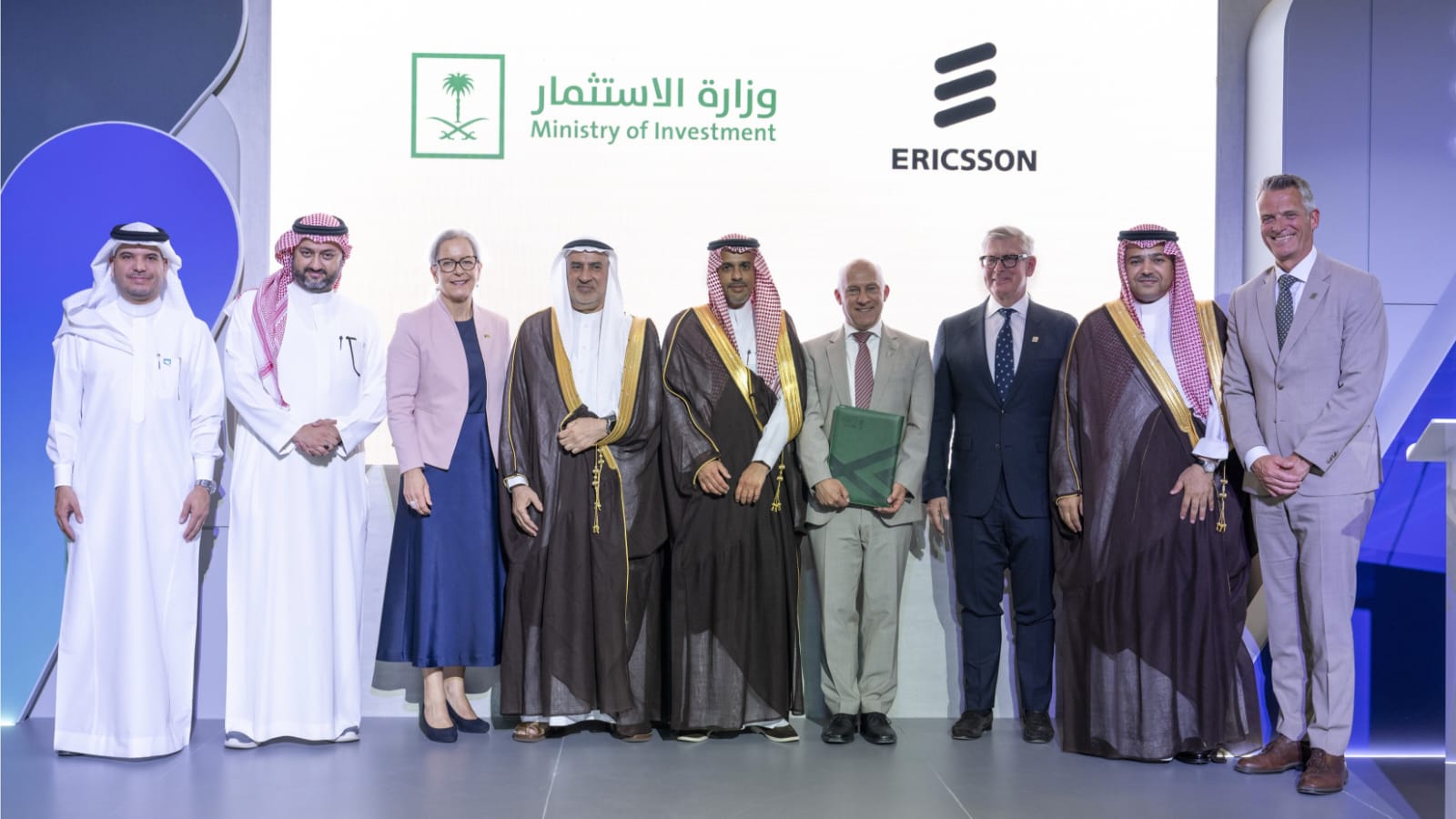
Ericsson Opens New Regional Headquarters in Riyadh to Drive Digital Innovation Across MEA

Strategic Move Reinforces Ericsson’s Commitment to Saudi Arabia

Ericsson has officially inaugurated its new regional headquarters in Riyadh, Saudi Arabia,

signaling a significant milestone in its commitment to the Kingdom and the broader Middle East

and Africa (MEA) region. The move underscores Saudi Arabia’s growing status as a tech and

innovation hub in line with Vision 2030.

High-Level Ceremony Marks New Chapter in Regional Operations

The inauguration ceremony was attended by top Saudi government officials and Ericsson leadership, including:

H.E. Eng. Haytham AlOhali, Vice Minister of Communications and Information Technology

H.E. Dr. Abdullah A. Aldubaikhi, Assistant Minister at the Ministry of Investment

H.E. Petra Menander, Swedish Ambassador to Saudi Arabia

Börje Ekholm, President & CEO, Ericsson Group

Patrick Johansson, President of Europe, Middle East and Africa, Ericsson

CEOs of stc Group and Mobily

Supporting Vision 2030 and the National Digital Economy

Officials emphasized that the new regional HQ supports Saudi Arabia’s Vision 2030 by

empowering local talent, driving innovation, and fostering sustainable, tech-led economic development.

The headquarters will act as a hub for collaboration, R&D, and digital transformation in the region.

Accelerating 5G and the Road to 6G

Discussions at the event focused on network evolution, the 6G roadmap, and Ericsson’s

role in shaping inclusive digital infrastructure. The company reaffirmed its commitment

to 5G leadership and emerging technology adoption across sectors.

Gen-E Program: Empowering Future Saudi Talent

Since 2018, Ericsson’s Gen-E Graduate Program at the Riyadh 5G Innovation Hub has

trained over 190 Saudi graduates, 50% of whom are women. The program equips youth

with expertise in 5G, IoT, and AI, contributing directly to local digital transformation.

“Blink Lab”: Advanced Connectivity for Gaming & Beyond

In partnership with King Abdulaziz City for Science and Technology (KACST), Ericsson launched

the Blink Lab—an advanced connectivity research hub focused on gaming, ultra-reliable 5G use

cases, and immersive digital experiences. The lab supports local innovation ecosystems and

global product development.

Driving Research with KAUST to Advance 5G and 6G

Ericsson also collaborates with King Abdullah University of Science and Technology (KAUST)

to accelerate 5G and 6G technologies, enhance scientific research, and nurture future talent—further

aligning with national ICT development goals.

Voices of Support: Building the Future Together

H.E. Dr. Abdullah Aldubaikhi: “This investment shows Saudi Arabia’s leadership in attracting global tech players.”

H.E. Eng. Abdulrahman AlMufadda: “The HQ cements Riyadh as a regional center for innovation.”

stc & Mobily CEOs: “Ericsson is a strategic partner in shaping the region’s digital future.”

Börje Ekholm – CEO, Ericsson: “Riyadh is now at the heart of our regional vision for digital growth.”

HP Expands Local Footprint in Egypt to Support Vision 2030 Priorities

 HP Inc. (NYSE: HPQ), a global technology leader, is strengthening its presence in Egypt with a

growing local team and a clear focus on supporting

digital transformation and workforce development in line with Egypt Vision 2030
HP announces the opening of its office in Cairo and plans to expand its local presence,

especially by expanding its teams over the coming three years. The company is scaling its

operations to meet the country’s rising demand for technology that enables business agility,

talent development, and increasingly inclusive economic growth.

A channel partners event in Cairo this week brings together 250 local and

international stakeholders to explore how the company’s solutions

can help drive innovation and support digital transformation across all sectors.

“Egypt has set a clear direction with Vision 2030 and the Digital Egypt Strategy – putting technology,

education, and innovation at the center of national development,”

said Helena Herrero, President of HP Southern Europe, Middle East and Africa.

“This creates a strong environment for companies like HP

to support national goals through technology, skills development, and innovation.”

Making technology available to as many people as possible and bringing the latest

technologies to businesses to support their growth is a strategic priority for HP.

In particular, the company supports the shift toward more flexible, digitally connected

workplaces through secure hybrid infrastructure, AI-enabled devices, and advanced print technologies.

These capabilities are particularly relevant as Egypt focuses on expanding digital access,

modernizing education, and preparing a future-ready workforce.

“With the largest portfolio of solutions across personal systems, printers, collaboration systems,

peripherals and services, HP is uniquely positioned to put the benefits of AI in the hands of businesses and employees.

One of our strengths is that we have always worked and

continue to work with a large ecosystem of industry-leading partners, as well as distribution partners,

to offer our users the best experiences”, Herrero concluded.

HP

By expanding its local footprint and network, HP aims to support the people,

the partners and the skills that will help build a digitally enabled workforce

and support Egypt’s broader ambitions and the future of work,

especially to strengthen the digital infrastructure, develop the growth of SMEs and

improve access to technology in the public and private sectors.

Women’s empowerment in the tech sector in line with KSA Vision 2030

In line with Vision 2030, Saudi Arabia has implemented multiple enabling policies in recent years, and the impact on gender equity is already evident. The latest World Bank data shows that women’s overall representation in the Saudi work force increased from 17.4% in 2017 to 34.5% in 2023.

The tech sector is a prime example of the Kingdom’s growing diversity and inclusion. According to the Ministry of Communications and Information, women’s participation in the Saudi tech industry stood at 28 percent in 2021 – higher than the European average of 19 percent, based on European Parliament data.

At Ericsson, we have had a presence in Saudi Arabia for over four decades, and we are committed to helping the ambitious nation advance its digital transformation and position itself as a global technology leader.

Together with our customers and partners across the Kingdom, we work to equip local female talent with the knowledge and skills to contribute to digital innovation that supports the objectives of Vision 2030.

LEAP 2025 provided us with an ideal platform to reinforce the message that diversity and inclusion are essential for driving performance and creating greater business value, in addition to fostering better working environments.

During the third edition of one of the world’s most attended tech events that take place annually in the Saudi capital Riyadh, we hosted two sessions dedicated to women’s leadership.

We brought together high-level female executives from the Kingdom’s ICT sector to share their personal experience as women in tech and explore ways of making the industry more inclusive.

In collaboration with our partners, we also organized the Girls in ICT event.

We invited young female talents to visit our stands to learn all about the latest technologies and attend an informative session that aimed to encourage them to discover the world of STEM and consider pursuing careers in this field.

Education is the key to inspire and empower the new generation of women to become future leaders. I always believed that ‘The future belongs to learners’, and we all have a responsibility to play in in upskilling young female talents through graduate, internship and mentorship programs.

At Ericsson, we introduced the Gen-E Graduate Engineer Program, tailored for Market Area Middle East and Africa (MMEA).

Gen-E, short for Generation Ericsson, has been designed to hone the technical skills of engineering graduates through comprehensive training on our technology, solutions and delivery methods, alongside the knowhow of our processes, tools and methodologies.

Our teams have collaborated with Saudi universities to provide young talent with world-class learning and career development opportunities.

A prime example is the graduate scheme we launched at our 5G Innovation Hub in Riyadh, joined by 100 local fresh graduates from the nation’s leading universities, including 50 women.

This promising cohort is now helping us blaze new trails in the industry by developing a wide range of 5G use cases across diverse sectors.

We also offer students on-the-job training and mentorship through our senior specialists, in addition to access to Ericsson Educate, our digital learning portal that aims to strengthen ICT skills and increase readiness for jobs in our industry.

Furthermore, initiatives such as our Flash Forward Hackathon, run in partnership with stc, Vonage and King Saud University, enable young talent to actively participate in achieving the goals of Vision 2030.

The competition brings together qualified mentors with the brightest minds from across Saudi Arabia to explore the future of technology in the Kingdom and give their innovations the space to shine.

On a global level, we are supporting girls’ tech education through our flagship program Connect to Learn. To date, we have provided access to digital learning and skills development courses for 485,000 children and young adults in 43 countries.

By contributing to build women’s representation in Saudi Arabia’s ecosystem of innovators and creators, we are empowering female talent to make a significant contribution to shaping a sustainable, connected and inclusive future for the Kingdom.