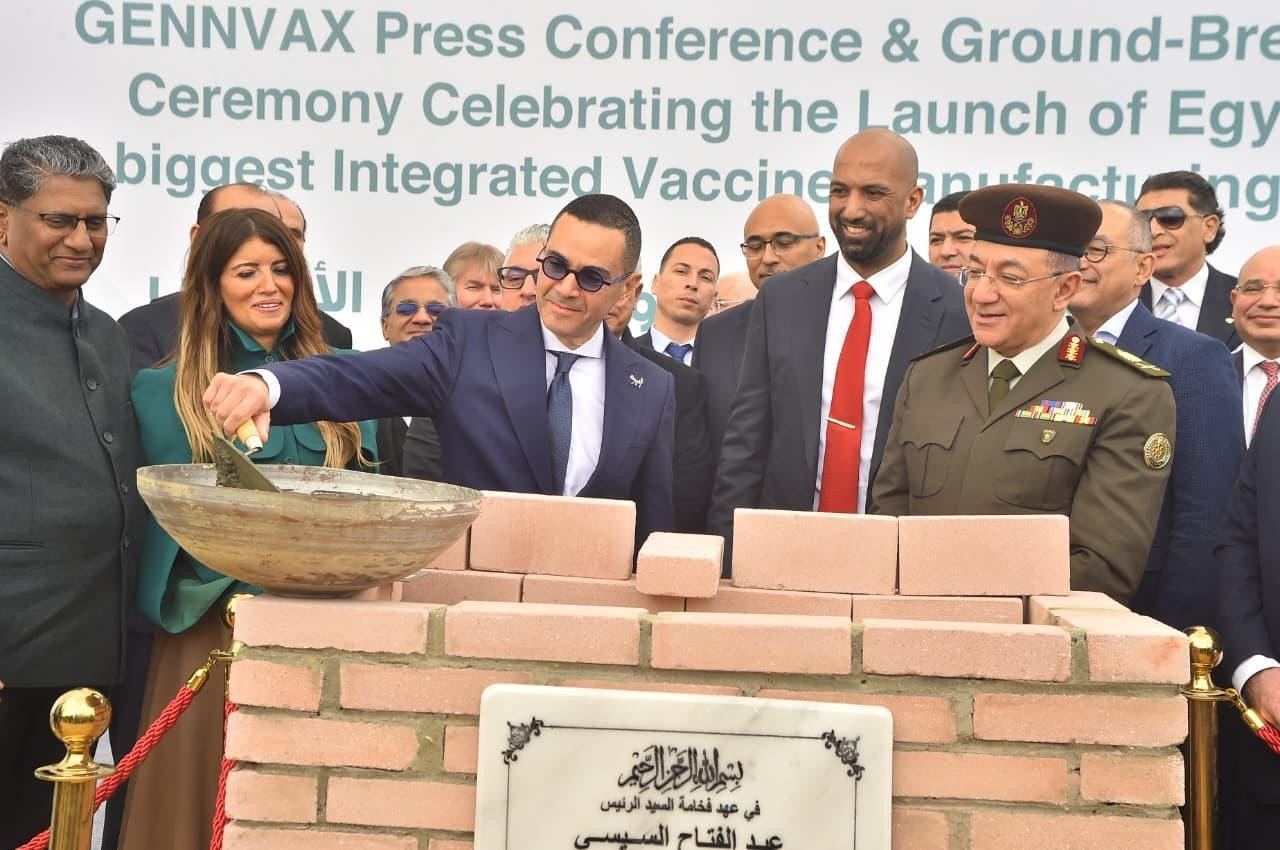
Egypt has taken a major step toward strengthening its vaccine manufacturing capabilities with
the foundation stone ceremony of GENNVAX, set to become the largest fully integrated vaccine
production facility in the region With a total investment exceeding USD 150 million, the project
aims to advance biopharmaceutical localization, enhance drug security, and position Egypt as a
regional hub for vaccine production
High-Level Ceremony Highlights Strategic Investment
The ceremony, held at the First Industrial Sector of Orascom Industrial Parks, was attended
by a high-level delegation including ministers, ambassadors, and leaders from Egypt’s healthcare
and pharmaceutical sectors Notable attendees included
Eng Hassan El Khatib, Minister of Investment and Foreign Trade
Dr. Khaled Abdel Ghaffar, Deputy Prime Minister for Human Development and
Minister of Health and Population
Mr Walid Gamal El-Din, Chairman of the Suez Canal Economic Zone
Eng Amr El-Batrik, CEO of Orascom Industrial Parks
Senior officials from the Egyptian Drug Authority, Unified Procurement Authority, WHO
and the Armed Forces Medical Services Administration were also present, alongside
GENNVAX international partners and technology transfer licensors

GENNVAX: Advancing Vaccine Localization and Production
Designed as a fully integrated vaccine manufacturing complex, GENNVAX will cover the entire
production cycle, from upstream to downstream processes, producing 29 vaccines and serums
through agreements with 15 international partners The facility will support Egypt’s national
immunization programs, while expanding export potential to Africa and the Middle East
With an annual capacity of 270 million doses per production line operating on a two-shift system
the facility integrates advanced digital infrastructure to ensure quality, efficiency, and traceability
aligning with WHO Prequalification (WHO PQ) standards to facilitate international distribution

Strengthening Egypt’s Pharmaceutical Industry and Drug Security
Officials highlighted the project’s strategic role in achieving Egypt Vision 2030, enhancing
drug security, reducing reliance on imports, and attracting foreign direct investment in the
biopharmaceutical sector GENNVAX is expected to create 500–700 direct jobs, contributing
to local employment and the development of skilled national talent capable of competing internationally
Sustainability at the Core
The GENNVAX facility has been designed as a green facility, utilizing solar energy
and environmentally responsible technologies, reflecting Egypt’s green transformation
strategy and commitment to sustainable industrial practices

Leadership Perspective and Long-Term Vision
Mr. Adam El Daba, Chairman of El Daba Holding and GENNVAX, noted that Egypt’s
macroeconomic improvements and investment-friendly climate were key drivers for
moving forward with this strategic project Dr Nibal Dahaba, shareholder and Managing
Director of GENNVAX, described the foundation stone ceremony as the start of a new
chapter for biopharmaceutical manufacturing in Egypt, emphasizing the company’s reliance
on advanced technology, international partnerships, and a long-term vision to deliver innovative
vaccine solutions for Egypt and Africa
Knowledge Localization and Capacity Building
GENNVAX has also launched the GENNVAX Academy for Continuing Medical Education
providing advanced training programs for professionals from leading national and international
regulatory bodies, including the Egyptian Drug Authority (EDA) and the Unified Procurement
Authority (UPA) This initiative ensures the sustained application of global quality standards
across local pharmaceutical production
Corporate Background
GENNVAX is part of El Daba Holding, a leading national group established in 1957, with
operations across Egypt, Canada, Russia, Saudi Arabia, the UAE, and several African countries
The project reinforces the state’s strategy to localize pharmaceutical manufacturing, expand
capacity in critical biotechnological industries, and enhance Egypt’s role as a regional hub for
vaccine development and production