رئيس مجلس الإدارة
سعيد اسماعيل
رئيس التحرير
مروة أبو زاهر

رئيس مجلس الإدارة
سعيد اسماعيل

رئيس التحرير
مروة أبو زاهر

Raya Foods Collaborates with the Ministry of Agriculture to Enhance Sustainable Agriculture and Empower Farmers within Egypt’s Vision 2030

Strategic Meeting to Support Agricultural Growth

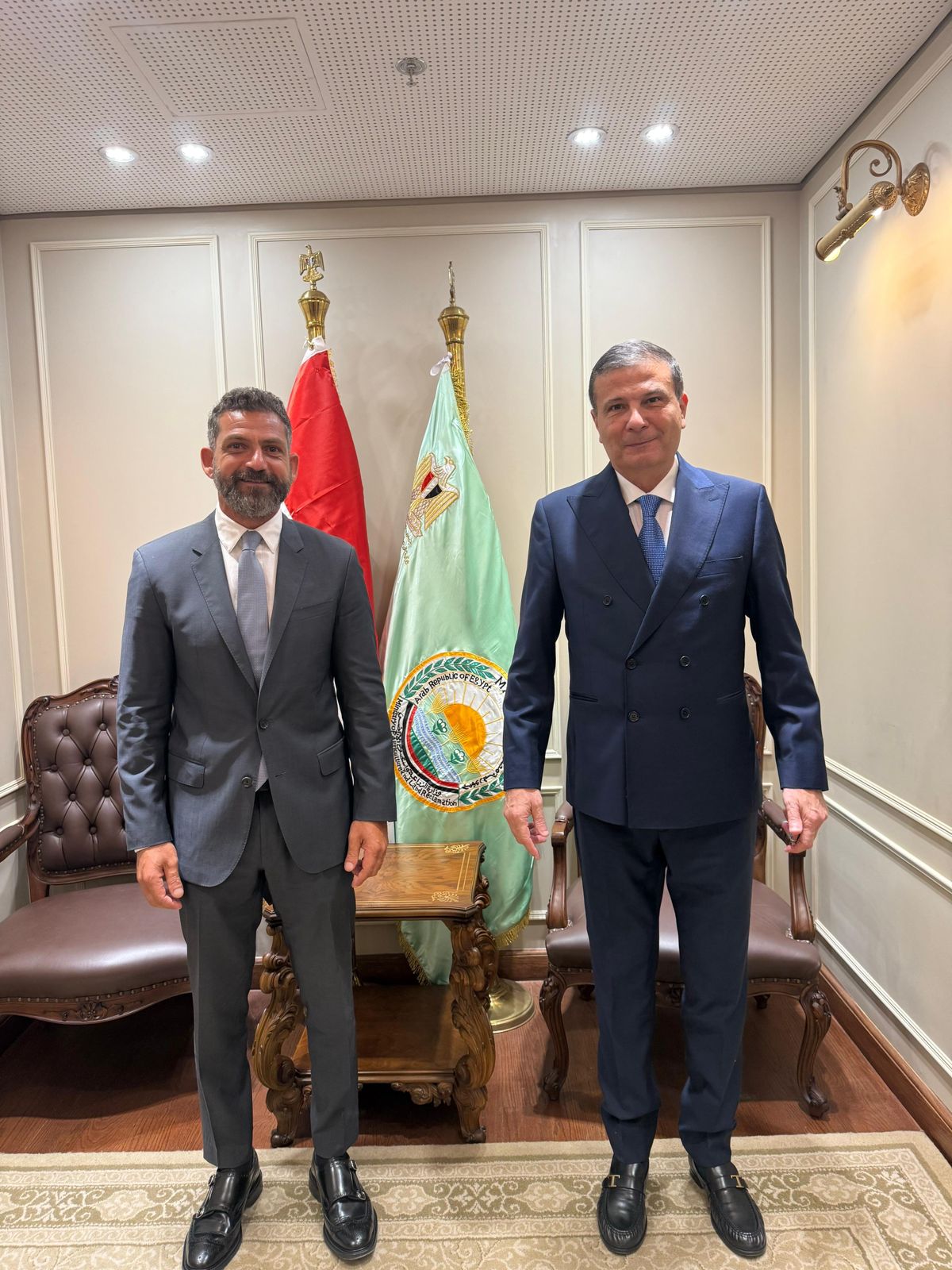
Raya Foods, a portfolio company of Raya Holding for Financial Investments, held a

strategic meeting with the Ministry of Agriculture and Land Reclamation to explore

potential areas of cooperation.

The meeting aligns with Egypt’s Vision 2030 and aims to advance the agricultural

sector, empower farmers, and increase sustainable food production and exports.

Showcasing the RAP Program

During the session, Raya Foods presented its flagship agricultural program, “RAP,” which

plays a crucial role in aligning local farming with global technical specifications and food safety standards.

The program is designed to deliver customized agricultural outputs that meet the unique

needs of international buyers.

Focus on High-Demand Global Crops

Discussions included proposals to expand into high-demand crops, such as jalapeños, which

have strong international market potential.

The company also explored opportunities to secure support from international

financial institutions to scale up operations.

Empowering Farmers Through Innovation

Commenting on the meeting, Omar Abdelaziz, CEO of Raya Foods, stated:

“Through RAP, we empower Egyptian farmers by combining training, technical support, and

smart financing, which enhances production quality and improves the global competitiveness

of our exports.”

He also emphasized the company’s leadership in exporting over 3,000 products annually

to 50 countries, all produced from 100% locally sourced raw materials.

Adopting Smart Agriculture Solutions

Raya Foods is investing in smart agriculture technologies, including modern irrigation

systems and drone-enabled crop management, to optimize productivity and sustainability.

Global Reach with Local Roots

Raya Foods specializes in the processing and export of frozen fruits and vegetables, exporting

99% of its products to global markets such as the United States, Europe, Asia, and the GCC, while

also serving local consumers with innovative, high-quality food solutions.

Driving Sustainable Agricultural Development

The company continues to expand its agricultural network and strengthen its role in the

agri-industrial value chain, driving innovation, efficiency, and export competitiveness.

This reinforces Raya Holding’s position as a leading force in Egypt’s private sector

support for agricultural development.

Agriculture

Led by the Central Bank of Egypt The Banking Sector Strengthens its Efforts in Sustainable Finance

 In continuation to the banking sector’s pivotal role, led by the CBE, in achieving Sustainable Development Goals (SDGs)

and Egypt’s Vision 2030, Egyptian banks strengthened their efforts towards advancing the sustainable finance field through the expansion of financial and banking services that integrate environmental and social elements.

In this regard, the CBE has intensified its initiatives to promote sustainable finance by encouraging banks to finance more sustainable economic activities and projects,

including financing the establishment of renewable energy power plants and waste recycling projects, as well as financing micro, small, and medium-sized enterprises (MSMEs).

Additionally, the CBE has prompted banks to innovate products and services for citizens with low to middle incomes, and Persons with Disabilities (PWDs).

In alignment with Egypt’s strategy in sustainable development “Egypt Vision 2030” and the United Nations’ Sustainable Development Goals (SDGs),

Egyptian Banks have innovated more than 24 products and financing programs within the environmental and social sectors, including energy efficiency, renewable energy, agriculture, healthcare, and digital transformation.

Moreover, around 31 banks availed products that have significantly supported the goal of fostering a “Competitive and Diversified Economy”, through supporting sustainable economic growth, enhancing the resilience and competitiveness of the economy,

increasing employment rates and adequate job opportunities, and improving the business environment, as well as empowering entrepreneurial culture, and promoting financial inclusion.

Furthermore, banks have introduced several financing programs aimed at strengthening the social equality.

In accordance with the aforementioned, Egyptian banks have launched financing products that have substantially contributed in achieving 12 of the United Nations’ SDGs, such as offering targeted financial inclusion accounts for the most vulnerable groups, as well as financing schemes for farmers and smallholders, which have enhanced the quality of life of marginalized groups. Banks have also introduced specialized products to address the needs of PWDs, in accordance with the UN’s goal for reducing inequalities.

Additionally, banks have rolled out programs to provide funding for educational tuition fees, aligning with the UN’s goal of quality education. To address the financial needs of women, banks have created customized products and financing programs for women, including financial and non-financial services to women entrepreneurs to contribute in achieving gender equality goal.

Driven by the pursuit of clean energy and climate action goals, banks have launched a number of products, including green financing programs and green bonds.

 It is important to note that the banking sector has shown its dedication to implementing Principles for Responsible Banking issued by the United Nations Environment Programme Finance Initiative (UNEP FI), where the compliance rate of the banking sector reached 75% of the sector’s total portfolio. These Principles aim to establish a sustainable banking system through the banks’ commitment to aligning their strategies with the SDGs, enhancing positive impacts on the environment and society, as well as mitigating risks. They also promote responsible customer engagement to foster sustainability initiatives and stimulate economic activities that ensure prosperity for both current and future generations, while advancing society’s development goals.

In recognition of the CBE’s commitment to sustainable finance, the Sustainable Banking and Finance Network (SBFN) – a member of the International Finance Corporation (IFC), part of the World Bank Group – has upgraded Egypt’s rating in 2024 from “Developing” to “Advancing” in its annual report.

This report benchmarks the country’s progress and outlines member institutions’ efforts to develop and implement national and regional sustainable finance frameworks, in line with leading international trends and best practices.  Notably, Egypt’s rating has been upgraded four times since joining SBFN.

It is worth mentioning that SBFN is one of the most prominent international platforms specialized in sustainable finance, as it represents 72 countries through 96 regulatory and governmental entities from emerging markets. The network promotes the integration of sustainability principles into financial systems towards achieving the national goals and priorities, in addition to enhancing the stability of the banking sectors.

The Egyptian banking sector’s commitment to the Principles of Sustainable Finance is a vital step towards achieving the goals of both national and international sustainable development. This contributes to building a more diversified and sustainable economy that addresses the needs of both current and future generations.

Central Bank of Egypt Hosts a Delegation from Zambia and Eswatini

In Coordination with the Alliance for Financial Inclusion

Central Bank of Egypt Hosts a Delegation from Zambia and Eswatini

The Visit Aimed to familiarize with the Egyptian Banking Sector’s Experience in the Fields of Sustainability and MSME’s Financing

Within the context of Egypt’s commitment to enhancing cooperation with African countries across various fields,

the Central Bank of Egypt (CBE) welcomed a delegation from Zambia and Eswatini for three days to learn about

the CBE and banking sector’s efforts in sustainable finance and Micro, Small,

and Medium Enterprises (MSMEs) financing.

The delegation’s visit was coordinated with the Alliance for Financial Inclusion (AFI)

with the aim to leverage on Egypt’s leading experience in promoting green financing

and establishing sustainable finance principles.

The delegation encompassed representatives from the Central Banks, the Ministries of Finance,

and several ministries and regulatory entities of the two countries.

During their visit, the Central Bank of Egypt presented a comprehensive overview of its regulatory framework devised

to actualize Egypt‘s Vision 2030.

The presentation highlighted the CBE’s unwavering efforts to support the state’s directives towards

the transition to sustainable economy that prioritizes social

and environmental aspects while promoting governance principles.

The delegation lauded Egypt’s remarkable progress in this fundamental arena.

The visit ended with a mutual commitment from all parties to strengthen future cooperation,

solidify mutual partnerships, and exchange expertise,

contributing to the achievement of shared goals and the realization of sustainable economic development.